Wine Glass vs. Glass Tumbler: A Head-to-Head Sourcing Decision for B2B Hospitality Buyers
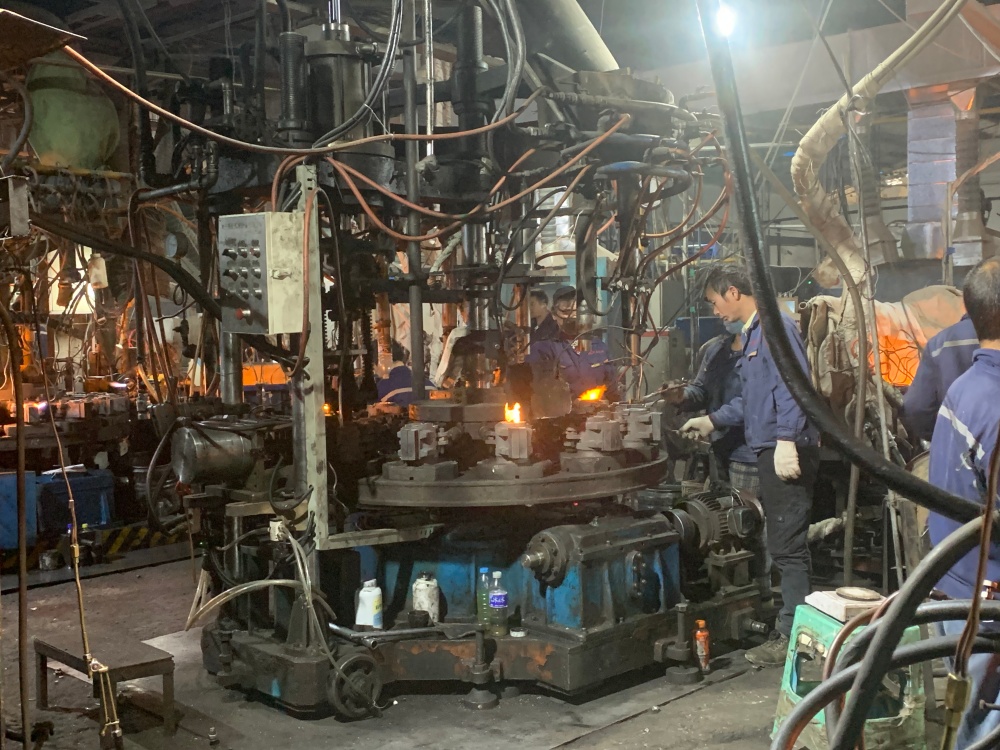
Machine-blown stemware and machine-pressed tumblers are produced on different forming routes within the same plant. Image: Kotto Glass Industrial Co.Ltd.
A wine glass and a glass tumbler can sit on the same shelf, carry the same brand and leave the same factory — and still require two completely different sourcing decisions. This head-to-head comparison puts two LAKOTTO production models side by side: the KTG1139 ribbed coloured wine glass and the KTK0370-2 glass tumbler. Both are manufactured by Kotto Glass Industrial Co.Ltd, a China-based daily-use glassware manufacturer and OEM/ODM supplier founded in 2003, and both run through the same certification, customization and quality-control system.
The sourcing answer is therefore not “which one is better”, but “which format matches the occasion, the breakage exposure, the freight profile and the compliance scope of the program you are buying for”.
Short verdict. Choose the KTG1139 wine glass for seated dining, banquet service, wine-forward menus, retail gift sets and presentation-led merchandising. Choose the KTK0370-2 glass tumbler for high-turnover beverage service, everyday multi-use drinking and logo-decorated promotional programs where a heavier, stemless machine-pressed body is easier to handle. Choose both when you are building a mixed assortment — the configuration used by the hypermarket, retail-chain and wholesale-distributor accounts that move 20–30 full containers per month.
1. The Real Sourcing Question Behind “Wine Glass or Tumbler?”
The two formats are usually placed in the same spreadsheet row and compared on unit price. That comparison breaks down as soon as the program starts running, because a wine glass and a tumbler do not consume the same budget lines.
- Breakage exposure differs by geometry. The KTG1139 stands 224 mm tall on an 82 mm base with a machine-blown stem. The KTK0370-2 is a 140 mm machine-pressed body on a 65 mm base. A taller stemmed item demands more protective carton engineering and consumes more vertical storage space.
- Freight weight differs. The wine glass weighs 215 g; the tumbler weighs 420 g. Container weight planning and landed freight allocation shift accordingly.
- The compliance surface differs. A coloured, ribbed, decorated item sits closer to the coatings-and-decorations clause that RoHS coverage addresses, while an undecorated machine-pressed tumbler follows a simpler decoration path — until a logo or coating is added.
- Reversibility is expensive. Once an assortment is locked, changing format means new molds, new packaging artwork and new test documentation.
So the practical sourcing question becomes: which format carries the lowest total program risk for the service occasion you are supplying, at the capacity you actually need?
2. Industry Background: Why the Format Decision Keeps Coming Up
Glass drinkware demand has continued to expand, and the sourcing base behind it has concentrated in China. The global glass drinkware market was valued at USD 14.0 billion in 2024 and is projected to reach USD 26.1 billion by 2030, with a projected CAGR of 11.1% between 2025 and 2030 (Grand View Research). China’s exports of glass and glassware reached approximately USD 25.53 billion in 2024 (UN Comtrade / Trading Economics).
Scope note: published market-size estimates differ depending on whether they count drinkware only or total glassware. Treat any single figure as scope-dependent rather than absolute.
On materials, soda-lime glass remains the dominant segment, accounting for roughly 70.8% of global glassware market share in 2024 (Grand View Research). That is directly relevant here: the KTG1139 wine glass is produced in soda-lime glass, while the KTK0370-2 tumbler is produced in high-borosilicate glass — two different material positions inside one assortment.
Compliance is the third pressure point. ISO 7086-1:2019 and European standard EN 1388-2 regulate the release of lead and cadmium from glass hollowware in contact with food, and in the United States, FDA Compliance Policy Guides CPG 7117.06 and 7117.07 specify extractable cadmium and lead limits. Neither wine glasses nor tumblers escape this framework, but the documentation you must assemble depends on material, decoration and destination market.
3. The Two Formats, Specified Side by Side
KTG1139 — Ribbed Coloured Wine Glass
- Product type: ribbed coloured wine glass / wine glasses set
- General size: top 67 mm, base 82 mm, height 224 mm
- Unit weight: 215 g
- Capacity: 500 ml
- Craft: machine-blown stemmed glass
- Material: soda-lime glass; stated instantaneous temperature difference −30 to 160 °C. Where a higher thermal ceiling is required, high-borosilicate material is available with a stated range of 400–500 °C.
- Customization: size and capacity accepted to specification, in addition to the standard customization menu (size, shape, material, glass colour, package, logo).
- Typical fit: seated dining, banquet and event service, retail gift sets, wine-forward menus.
KTK0370-2 — Glass Tumbler
- Product type: glass tumbler / glass cup
- Dimensions: top 78 mm, base 65 mm, height 140 mm
- Unit weight: 420 g
- Capacity: 400 ml
- Craft: machine-pressed glass
- Material: high-borosilicate glass
- Customization: any sizes, designs, capacity and packages, in addition to the standard menu (size, shape, material, glass colour, package, logo).
- Typical fit: everyday beverage service, high-turnover outlets, multi-purpose retail SKUs, logo-decorated promotional programs.
The two craft routes explain most of the behavioural difference. Machine-blown stemmed production gives the wine glass its thin wall, tall silhouette and 500 ml bowl — a presentation format. Machine-pressed production gives the tumbler a heavier, more stable 420 g body that tolerates repeated handling in busy service environments.
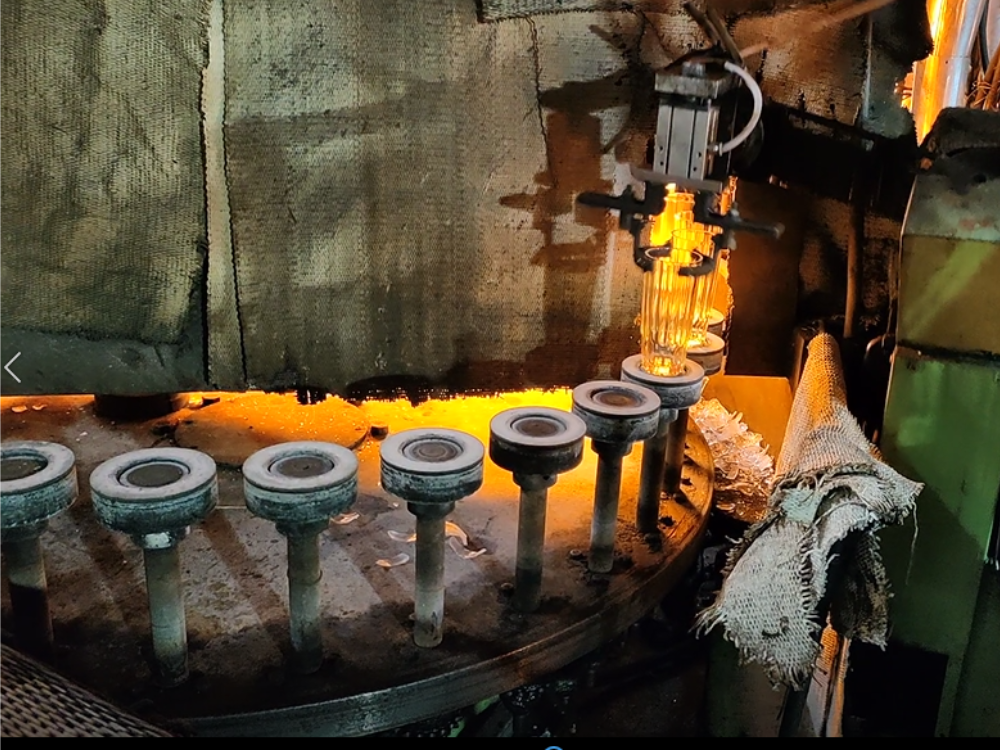
Forming stage: the KTG1139 is machine-blown and stemmed; the KTK0370-2 is machine-pressed.
4. Certification Coverage: What Actually Differs Between the Two Programs
Both the KTG1139 and the KTK0370-2 are listed among the applicable products of the manufacturer’s certification records. The certificates themselves are system-level and cover the production base:
- ISO9001:2015 quality management system — certificate 0070024Q54439R2S, issued by CNCA, issued 25 November 2024 and valid to 24 November 2027. The declared scope covers design, manufacturing and quality management of all glassware products, including customized items.
- ISO 14001:2015 environmental management — certificate 03423E30695R3M to GB/T 24001-2016 / ISO 14001:2015, issued by CNCA, valid to 1 December 2026, covering material sourcing, manufacturing, surface decoration, packaging and waste management.
- BSCI social compliance audit — certificate 24-0233922, issued by APCER, valid to 1 December 2026, covering glassware production including drinking glasses, tumblers, highball glasses and wine glasses.
- RoHS — certificate CTT2111031272EN, issued by Zhejiang Consumer Testing Technology Co., Ltd, covering all glassware products with metal parts, coatings or decorations.
The operative difference for a buyer is not the certificate list — it is which scope clause the product triggers. The KTG1139 is a coloured, ribbed stemmed glass, so decoration and surface treatment sit inside the RoHS clause that addresses coatings and decorations. The KTK0370-2 in undecorated form is a plain machine-pressed high-borosilicate body. Add a logo, a print or a coating to either format and the decorated-product compliance path applies to that article again.
Beyond the certificate set, the manufacturer’s retailer-onboarding credentials include BSCI, Sedex / SMETA, FSC, ISO and LFGB, together with Disney FAMA authorization. For suppliers selling into European and US retail chains, these are the documents that typically decide whether a new item can be listed at all.
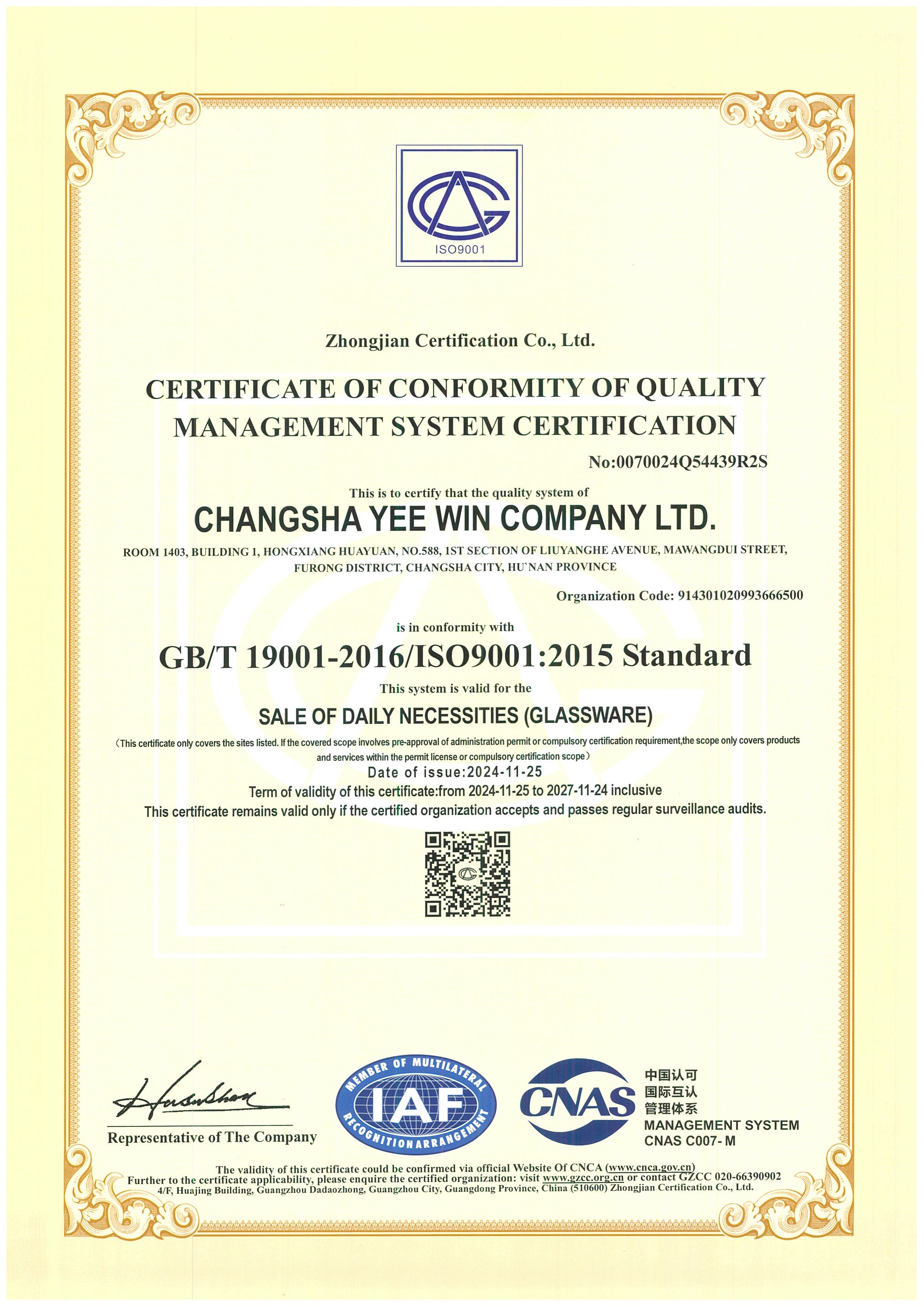
ISO9001:2015 certificate 0070024Q54439R2S — scope covers design, manufacturing and quality management of all glassware products, including customized items.
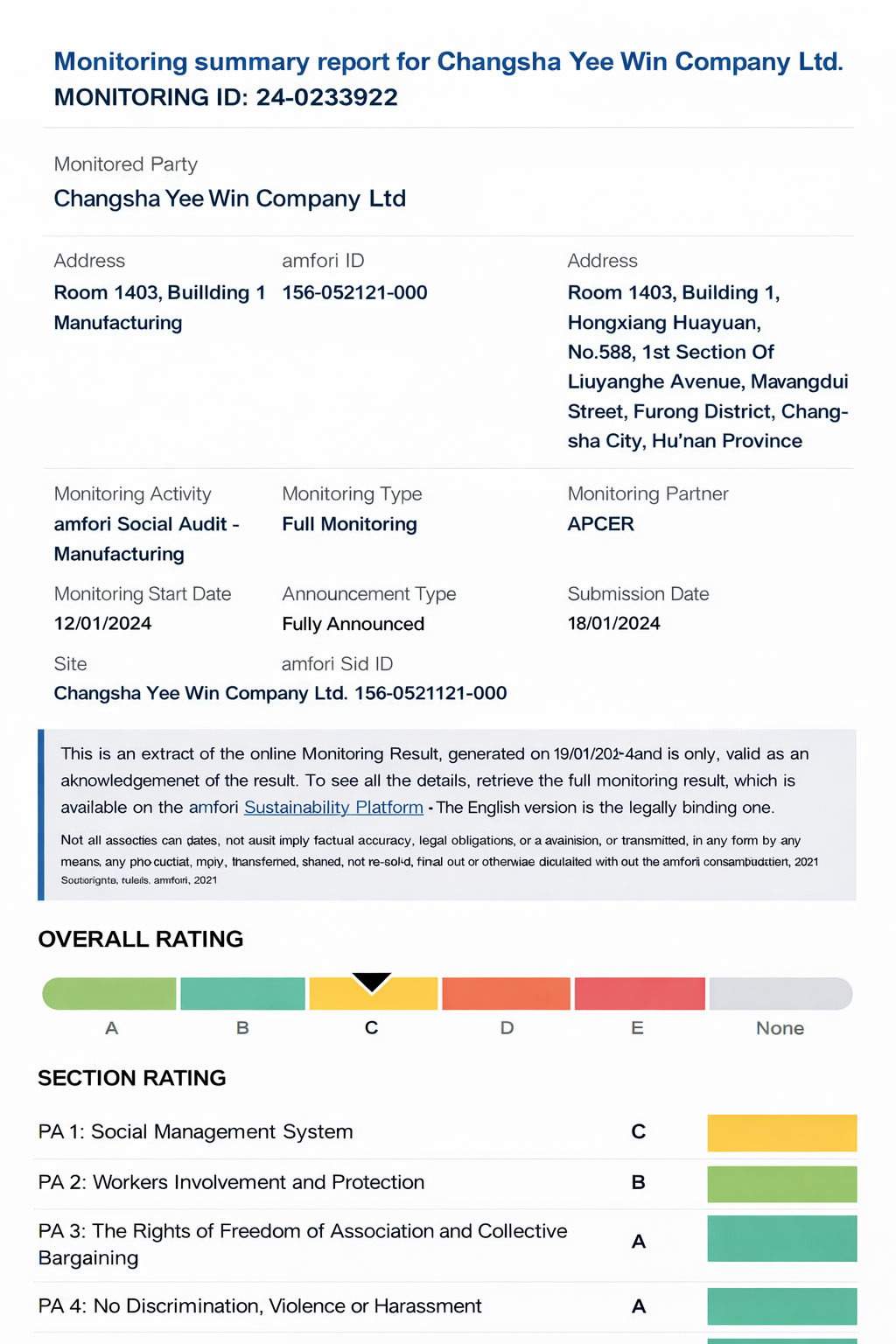
BSCI certificate 24-0233922 (APCER) — covers drinking glasses, tumblers, highball glasses and wine glasses.
5. Step-by-Step: A Six-Stage Sourcing Workflow for Choosing Between the Two
Step 1 — Map the format to the service occasion. If the glass is poured at the table and left in front of a guest, stemmed ware is the functional format: the KTG1139 at 500 ml. If the glass is refilled continuously, carried on trays, stacked or sold as an everyday multi-use item, the KTK0370-2 at 400 ml is the more practical body.
Step 2 — Set the durability and handling expectation. Compare 215 g against 420 g, and a 224 mm stemmed silhouette against a 140 mm pressed body. Heavier, shorter ware generally survives handling-intensive environments better; stemmed ware generally needs a more protective packaging specification. Decide which cost you would rather carry: replacement rate or packaging weight.
Step 3 — Confirm the compliance scope for the destination market. Lead and cadmium release limits for glass hollowware are covered by ISO 7086-1:2019 and EN 1388-2 in Europe and by FDA CPG 7117.06 / 7117.07 in the United States. If the item carries colour, a coating or a logo, add the RoHS-scope documentation — certificate CTT2111031272EN covers glassware with metal parts, coatings or decorations — and confirm which retailer audits your customer requires (BSCI, Sedex / SMETA, FSC or Disney FAMA).
Step 4 — Fix the customization and packaging brief early. The OEM/ODM menu covers size, shape, material, glass colour, package and logo, with one-stop support for new product design and development, mold development, customized packaging design, private label and branding. Both models accept customized sizes, designs, capacity and packages, so a program that needs matched packaging across a mixed assortment stays inside a single supplier relationship.
Step 5 — Validate with samples and agree the QC plan. Free samples are offered with a trial order at first accepted. Quality control is stated as 100% testing, with pre-shipment inspection by the QC team, an option for third-party inspection before shipment, and optional verification on arrival at destination. Use sample review to check stem alignment and rim finish on the KTG1139, and wall-thickness consistency on the KTK0370-2.
Step 6 — Lock commercial terms and plan replenishment. The stated MOQ is 3,000 pcs; delivery terms include FOB, DDP, CIF and EXW; and production lead time runs 30–45 days. Popular items can be despatched quickly from a 4,000+ ㎡ warehouse, which supports tighter, just-in-time-style replenishment planning for fast-moving SKUs.
6. Use Cases: Where Each Format Wins
Hospitality, Hotel F&B and Banquet Service
Stemmed ware dominates tableside wine service. The KTG1139’s 500 ml bowl and machine-blown stem match that occasion, and its ribbed coloured profile gives a venue a visible point of difference without changing the service ritual. The stated instantaneous temperature difference of −30 to 160 °C matters for buyers running high-temperature commercial dishwashing, and where a higher thermal ceiling is needed, high-borosilicate material is available with a stated 400–500 °C range.
Hypermarket and Supermarket Chains
High-volume grocery accounts typically buy both formats within one coordinated packaging program. A Russian hypermarket and supermarket chain has been supplied for five years at a volume of 20–30 full containers per month, with custom-designed glassware and packaging matched to different store formats; the stated outcome was improved product visibility and consistent shelf turnover across stores.
Wholesale Distributors and Home Goods Retailers
A Brazil-based wholesale distributor and home goods retailer has been supplied for five years at 20–30 full containers per month with a flexible product assortment and customizable packaging. The stated result was an expanded product offering for local retailers, better inventory variety and faster turnover of glassware items. Distributors carrying both formats can split risk: tumblers for reliable velocity, stemmed ware for margin.
Retail Chains with Their Own Branding
A Poland-based retail chain and supermarket has been supplied for five years at 20–30 full containers per month with custom-branded glassware and matching packaging, which the case records as enhancing in-store sales and brand visibility. Private-label programs usually standardise on one format per category slot — the tumbler as the everyday SKU and the stemmed glass as the seasonal or gifting SKU.
Promotional and Beverage Programs
Logo-decorated drinkware is a familiar promotional format, and both models accept logo customization. Because decoration brings the article into the RoHS coating-and-decoration scope, promotional buyers should confirm the decoration specification early in the brief rather than at the pre-shipment stage.
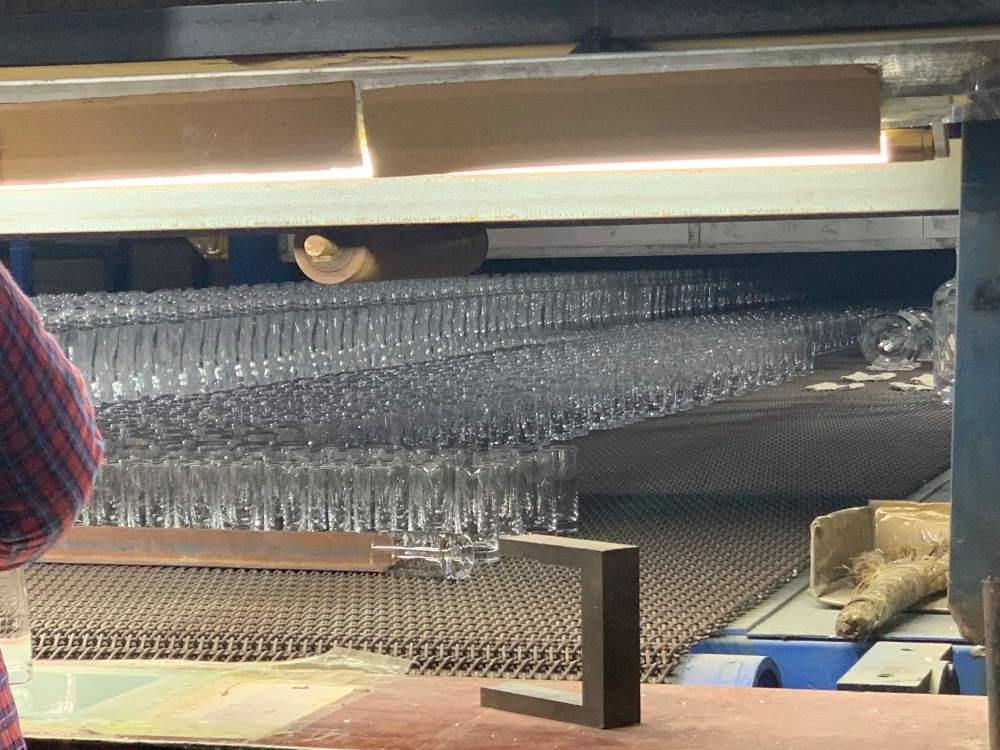
Pre-shipment inspection is a stated standard step, with third-party inspection available before shipment.
7. KTG1139 vs. KTK0370-2: Comparison Table
| Decision dimension | KTG1139 — Ribbed Coloured Wine Glass | KTK0370-2 — Glass Tumbler |
|---|---|---|
| Product type | Ribbed coloured wine glass / wine glasses set | Glass tumbler / glass cup |
| Craft route | Machine-blown stemmed glass | Machine-pressed glass |
| Material | Soda-lime glass; high-borosilicate material available | High-borosilicate glass |
| Dimensions (top / base / height) | 67 mm / 82 mm / 224 mm | 78 mm / 65 mm / 140 mm |
| Unit weight | 215 g | 420 g |
| Capacity | 500 ml | 400 ml |
| Stated thermal data | Instantaneous temperature difference −30 to 160 °C; high-borosilicate material range 400–500 °C | High-borosilicate body; no temperature figures listed in the model data |
| Customization | Size and capacity customizable, plus size, shape, material, glass colour, package, logo | Any sizes, designs, capacity, packages, plus size, shape, material, glass colour, package, logo |
| Certification position | Listed among applicable products for ISO9001:2015, ISO 14001, BSCI and RoHS; coloured and decorated construction falls inside the RoHS coating/decoration scope | Listed among applicable products for ISO9001:2015, ISO 14001, BSCI and RoHS |
| Handling and storage profile | Taller stemmed silhouette; requires more protective carton engineering and more vertical storage | Heavier, shorter pressed body; tolerates handling-intensive service environments |
| MOQ and lead time (company-level terms) | 3,000 pcs; 30–45 days | 3,000 pcs; 30–45 days |
| Best-fit program | Seated dining, banquet service, retail gift sets, presentation-led merchandising | High-turnover beverage service, everyday multi-use, logo-decorated promotional programs |
8. FAQ: Wine Glass vs. Glass Tumbler Sourcing Questions
What certifications cover the KTG1139 wine glass and the KTK0370-2 glass tumbler?
Both models are listed among the applicable products of the manufacturer’s certification records, and the certificates are system-level. The quality management system is certified to ISO9001:2015 under certificate 0070024Q54439R2S issued by CNCA (issued 25 November 2024, valid to 24 November 2027), with a scope covering design, manufacturing and quality management of all glassware products including customized items. Environmental management is certified to ISO 14001:2015 under certificate 03423E30695R3M (valid to 1 December 2026). Social compliance is covered by a BSCI audit, certificate 24-0233922 issued by APCER (valid to 1 December 2026). RoHS certificate CTT2111031272EN, issued by Zhejiang Consumer Testing Technology Co., Ltd, applies to glassware with metal parts, coatings or decorations — which is relevant to the coloured, decorated wine glass format and to any item carrying a logo or coating. Company-level credentials also include Sedex / SMETA, FSC, Disney FAMA and LFGB.
Can both formats be customized in size, shape, material, glass colour, package and logo?
Yes. LAKOTTO operates as an OEM/ODM supplier with customization across size, shape, material, glass colour, package and logo. The model data confirms this at product level: the KTG1139 wine glass lists size and capacity as customizable in addition to the general menu, and the KTK0370-2 tumbler is offered with any sizes, designs, capacity and packages. The one-stop service covers new product design and development, mold development, customized packaging design, private label and branding, and production follow-up with quality control, supported by an in-house R&D team of 10 designers.
What is the minimum order quantity, and what commercial terms apply?
The stated MOQ is 3,000 pcs. Delivery terms offered are FOB, DDP, CIF and EXW. Payment terms include 10% T/T with 90% before shipment, 90% against copy B/L, 100% T/T in advance, and 30% deposit in advance with 70% balance before shipment. Acceptance criteria are pre-shipment inspection by the supplier QC team, with an option for third-party inspection before shipment and optional verification on arrival at destination.
Can I evaluate both formats with samples before placing a production order?
Yes — free samples are offered with a trial order at first accepted. Sample evaluation is the stage that settles what specifications alone cannot: how the 224 mm, 215 g KTG1139 stemmed glass behaves in your racking and dishwashing cycle, and how the 420 g, 400 ml KTK0370-2 tumbler performs under daily service conditions. Sample review is also the point to confirm decoration, packaging artwork and the compliance documents your retail customer will request.
What is the production lead time, and how is breakage controlled?
The stated production lead time is 30–45 days, with export coverage across Europe, the Americas and Southeast Asia. Breakage control runs through two channels: professional packaging designed for safe transport and product protection with breakage-rate control, and a clear, prompt return and exchange process after delivery. A 4,000+ ㎡ warehouse holding popular glass items supports faster dispatch for replenishment orders. For programs that need both formats — the typical hypermarket or wholesale assortment — the practical next step is a sample request and a program-specific quote through cs61@kottoglass.com or WhatsApp +8619310185010.
9. Conclusion: Match the Format to the Occasion, Not the Price Row
Both formats are production-ready inside the same certified manufacturing system: the KTG1139 as a 500 ml machine-blown stemmed soda-lime wine glass, and the KTK0370-2 as a 400 ml machine-pressed high-borosilicate tumbler. The sourcing decision resolves on four axes — durability and handling, presentation and occasion, unit economics including freight weight and packaging, and the compliance scope your destination market and retail customer require.
Hospitality buyers serving wine at the table should begin with the KTG1139. Buyers running high-turnover beverage service, everyday retail volume or logo-decorated promotional programs should begin with the KTK0370-2. Buyers building a mixed assortment — the standard configuration for hypermarket, retail-chain and wholesale-distributor accounts — should brief both formats inside a single packaging and compliance program, which is how the 20–30 container-per-month accounts described above have been supplied for five consecutive years.
The next practical step is a sample comparison: request both formats, test them against your actual service conditions, and confirm the compliance documents your customer will ask for before scale-up.
Talk to the supplier behind both formats
LAKOTTO is the glassware brand of Kotto Glass Industrial Co.Ltd, a China-based daily-use glassware manufacturer and OEM/ODM supplier founded in 2003, exporting 99% of its output to Europe, South America and Asia. Request samples or a program quote for the KTG1139 wine glass and the KTK0370-2 glass tumbler:
- Email: cs61@kottoglass.com
- WhatsApp / Phone: +8619310185010
- Website: www.kottoglass.com
Standard MOQ 3,000 pcs · Lead time 30–45 days · OEM/ODM customization across size, shape, material, glass colour, package and logo.
Have Questions or Need More Details?
Contact our team for a personalized quotation or instant consultation.
Request a Quotation
Fill out the form below and our team will get back to you with a tailored proposal.
WhatsApp Direct Chat
Prefer to chat in real-time? Message us on WhatsApp for instant assistance & quick answers.
- Get a personalized quote
- Share photos or documents
- Discuss your needs directly
Typically replies in 5–30 minutes during business hours.