
Soda Lime vs. High Borosilicate Glass Drinkware: A Buyer's Comparison Guide
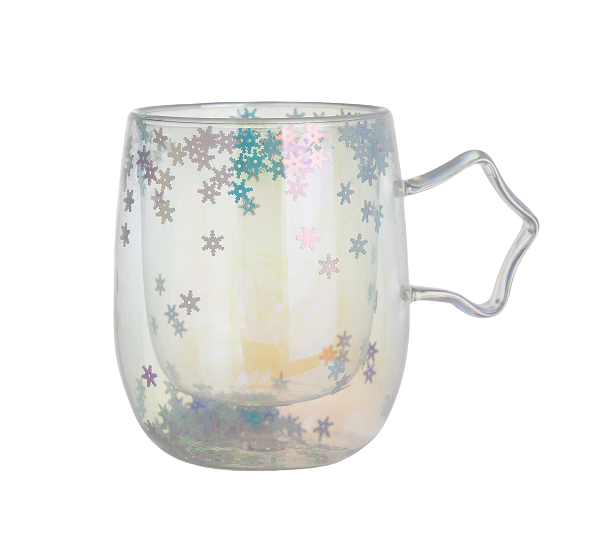
Cover: LAKOTTO KTDW0721-GGL, a hand-blown high borosilicate double wall glass.
Short answer: specify soda lime glass when the program is volume-led stemware or tumblers where dimensional repeatability and cost position decide the deal. Specify high borosilicate glass when the design depends on thin, heat-resistant walls, a double-wall insulated construction, or a premium shelf story. In both cases, the material name on the quotation is not enough: the forming method, the net weight per unit and the compliance file decide what actually arrives at your warehouse.
Soda lime glass and high borosilicate glass are not interchangeable inputs in a Glass Drinkware program. They differ in raw material, in how the piece is formed, in the dimensional and weight profile you receive, and in the documentation that supports the item in the EU and US markets. This guide compares the two materials through two LAKOTTO production models: the soda lime KTG1139 Ribbed Colored Wine Glass and the high borosilicate KTDW0721-GGL Double Wall Glass. Both are catalogued drinkware items with recorded dimensions, capacity, net weight and process routes, which makes them a workable comparison pair for a buyer in the research and evaluation stage.
Problem definition: the material question hides inside the quotation
Most glassware quotations describe the product as "glass", "crystal glass" or "premium glass". Those words do not tell a buyer whether the item is soda lime or borosilicate, whether the stem was machine-blown or hand-blown, or what the unit will weigh when it is packed. The gap creates four predictable problems.
- Non-comparable prices. A 500 ml stemmed glass at 215 g and a 340 ml double-wall glass at 145 g cannot be ranked on unit price alone. The two items use different material, different process routes and different amounts of labour.
- Freight and breakage surprises. Net weight per unit drives carton weight, container payload and breakage exposure. A heavier wall construction can consume freight budget that was never modelled.
- Thermal complaints at the consumer end. A soda lime item specified for a borosilicate use case — thin walls, hot service, temperature transitions — will generate returns that have nothing to do with the supplier's workmanship.
- Retail onboarding failure. Food-contact declarations, heavy-metal release reports, social audit reports and coating-related documentation are requested at listing stage. A supplier who cannot map a certificate to a specific model slows the whole program down.
The practical conclusion is that material and process must be fixed at SKU level before a quotation is compared, not after a sample is rejected.
Industry background: why the material decision sits with the buyer, not the market
The global glass drinkware market was valued at USD 14.0 billion in 2024, according to Grand View Research. Europe accounted for a 33% revenue share of that market in 2024. Concentration is low: the five largest players — Arc International, Bormioli Rocco, Libbey, Oneida and Sisecam Glassware — held a combined 26% share in 2025. The remaining share is spread across regional manufacturers, importers and private-label programs.
That fragmentation has a direct procurement consequence. There is no single market-wide material default for drinkware, so the material specification is negotiated between buyer and supplier, program by program. Two programmes that look identical on a shelf can be built from different materials, different forming routes and different certification packs.
Regulatory context reinforces the point. Glass drinkware placed on the EU market as a food-contact material must comply with Regulation (EC) No 1935/2004, and must be manufactured in accordance with Good Manufacturing Practices under Commission Regulation (EC) No 2023/2006. Heavy-metal release from glass hollowware is commonly assessed against frameworks such as ISO 7086-1:2019 and EN 1388-2, while US buyers typically reference FDA Compliance Policy Guides 7117.06 and 7117.07. None of these frameworks asks whether the glass is soda lime or borosilicate; they ask for evidence about the specific article.
Customs classification adds a second layer. HS 701337 covers drinking glasses that are not stemware and are neither lead crystal nor glass-ceramics. A stemmed wine glass and a double-wall tumbler therefore do not sit automatically in the same statistical bucket, and landed-cost modelling should map each product family to its own code rather than treating all drinkware as one category.
Demand-side signals point in the same direction. China's exports of home glass products under HS 7013 to Brazil reached nearly USD 200 million in 2024, an increase of 53% compared with about USD 130 million in 2023, according to industry trade analysis published by Garbo Glassware. Growth of that shape is typically volume-led and price-sensitive — which is exactly the environment in which soda lime and borosilicate get quoted side by side without a clear specification.
Detailed solution: how the two materials actually differ on a purchase order
What soda lime glass means in a drinkware program
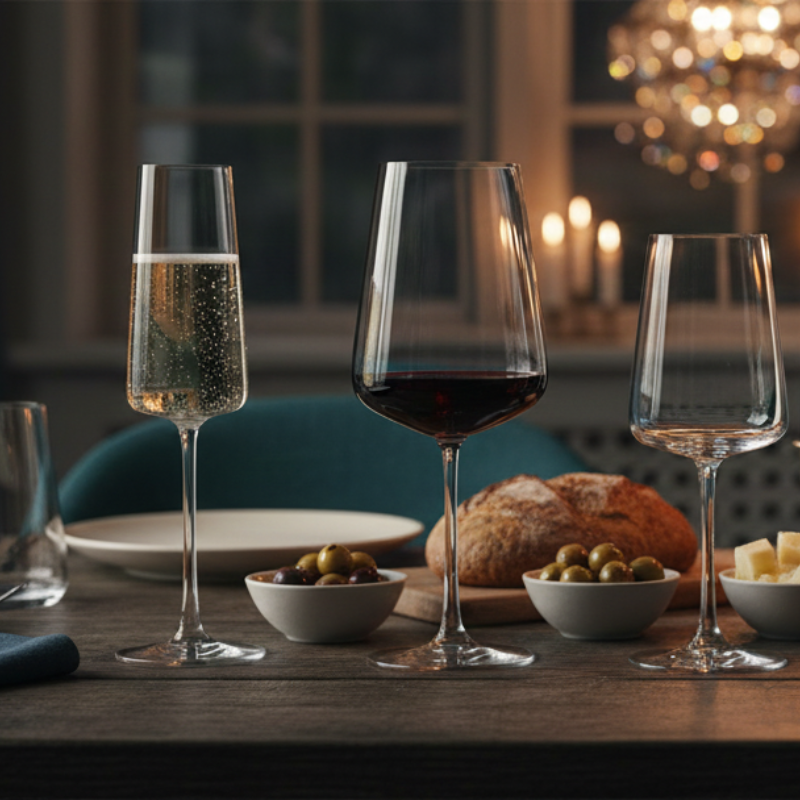
Soda lime glass is the mainstream material for volume drinkware. In the LAKOTTO range, it is the recorded material for the KTG1139 Ribbed Colored Wine Glass, a machine-blown stemmed glass with these specification values: top diameter 67 mm, base diameter 82 mm, height 224 mm, capacity 500 ml, net weight 215 g.
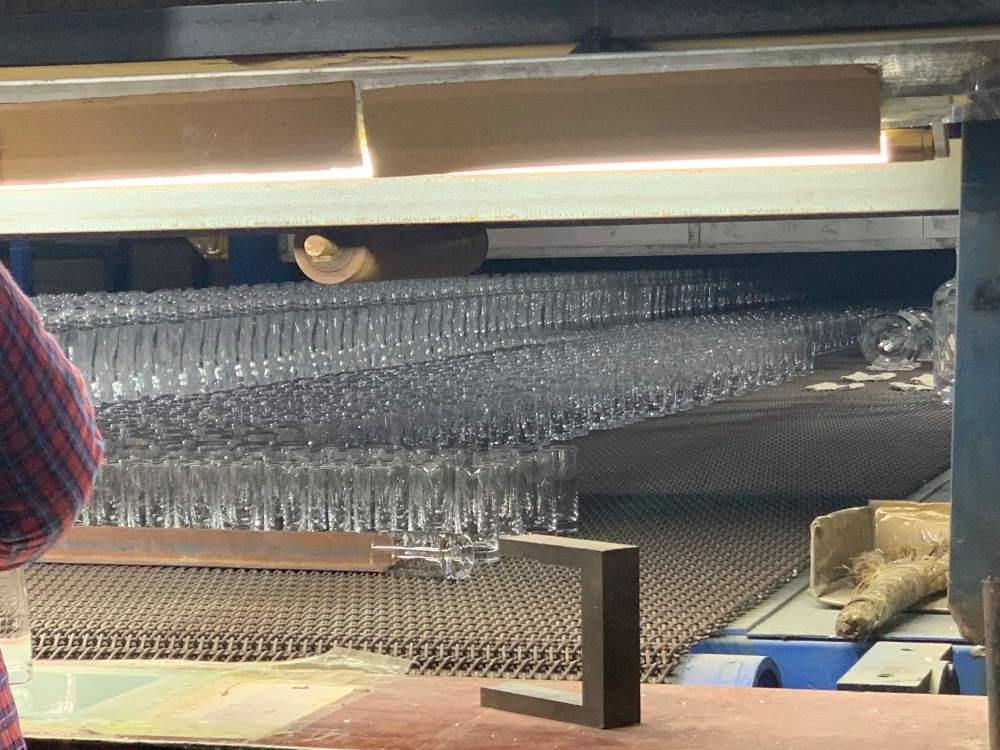
The machine-blown route forms bowl and stem as one piece on automated equipment. For a buyer, the implication is repeatability: the dimensional envelope of the item stays stable across production runs, which matters when the glass has to fit a retail gift box, a rental fleet's replacement pool or a chain store's shelf module. Coloured ribbed decoration also carries a cost advantage at volume, because decoration is applied within a repeatable process rather than by hand.
The limits are equally clear. Soda lime needs a certain wall thickness to reach the strength a retail program expects, and its thermal shock tolerance is narrower than borosilicate. It is the wrong specification for a thin-walled item intended for boiling liquid, or for a product story built on temperature transitions.
What high borosilicate glass means in a drinkware program
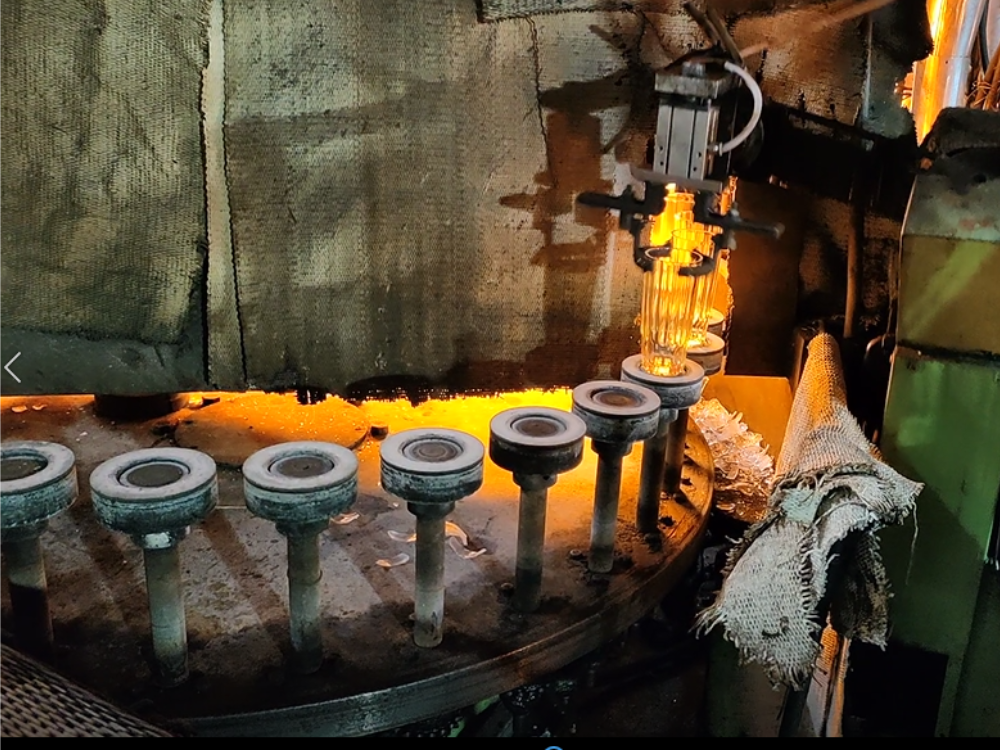
Borosilicate glass is formulated with boron oxide, which is why it is specified where thermal shock resistance and thin, light walls matter. In the LAKOTTO range, it is the recorded material for the KTDW0721-GGL Double Wall Glass: top diameter 84 mm, base diameter 60 mm, height 110 mm, capacity 340 ml, net weight 145 g, hand-blown high borosilicate glass, with an Ion Plating (I.P.) coating. The recorded features are double-walled insulated construction and heat resistance.
Double-wall construction changes the manufacturing economics. Two glass bodies are formed and joined, so the item consumes more process time and more quality-control attention than a single-wall tumbler of similar capacity. In exchange, the buyer gets insulation: the outer wall stays cooler in hot service and warmer in cold service, and condensation on the outside of the glass is reduced. That is a visible consumer benefit, and it is usually what justifies a premium position on shelf.
Borosilicate is not automatically hand-blown, and buyers should not assume it is. The LAKOTTO KTK0370-2 400 ml ribbed highball tumbler is also high borosilicate, but it is machine-pressed: top diameter 78 mm, base diameter 65 mm, height 140 mm, capacity 400 ml, net weight 420 g. Same material family, very different weight and process economics.
Machine-blown, hand-blown and machine-pressed: the process decides the tolerance
Material and process are two separate decisions, and the process decision often moves the cost more than the material decision does.
- Machine-blown stemmed glass (KTG1139). Best fit for volume stemware where dimensional consistency across runs is the priority and the buyer needs a large replacement pool.
- Hand-blown borosilicate (KTDW0721-GGL). Best fit for double-wall assembly and complex shapes where the wall has to be controlled piece by piece. Labour content is higher and piece-to-piece variation is a normal characteristic to manage through inspection rather than to eliminate.
- Machine-pressed borosilicate (KTK0370-2). Best fit for thick-walled, ribbed or textured designs at volume. It is the heaviest option in this comparison at 420 g for 400 ml, which is a freight decision as much as a design decision.
Reading the specification: diameter, capacity and net weight
Three numbers do most of the commercial work in a drinkware comparison.
Top diameter — 67 mm versus 84 mm. Rim diameter governs how the glass is loaded (ice, garnish, filling equipment), how it fits a dishwasher rack, how it reads on shelf, and how much packaging cavity it needs. The 84 mm opening on KTDW0721-GGL suits a generous, open double-wall serve; the 67 mm opening on KTG1139 is a classic stemmed wine profile.
Capacity — 500 ml versus 340 ml. Fill volume determines the serve specification your customer will publish. Note that capacity and height do not move together: KTG1139 holds 500 ml at 224 mm height, while KTDW0721-GGL holds 340 ml at 110 mm height, because the double-wall format trades vertical space for insulation.
Net weight — 215 g versus 145 g. Here the comparison becomes genuinely useful. Divided by capacity, the two records work out to roughly 0.43 g per millilitre in both cases (215 g ÷ 500 ml and 145 g ÷ 340 ml). The machine-pressed KTK0370-2 works out far heavier at roughly 1.05 g per millilitre (420 g ÷ 400 ml). The lesson for a buyer is that the material label alone does not predict shipping weight; wall construction and forming method do. A double-wall borosilicate glass is not automatically heavier than a single-wall soda lime glass, and a borosilicate tumbler is not automatically lighter than a soda lime one.
Thermal behaviour: what the specification record says, and what it does not
The specification records used for this drinkware range state a high-borosilicate working temperature range of 400 to 500 degrees Celsius, and an instantaneous temperature-difference tolerance of −30 to 160 degrees Celsius. Those are range-level figures recorded in the product data. They should not be read as a blanket performance certificate for every SKU: a supplier should provide the thermal-shock test report for the specific item and the specific market you are selling into. Buyers evaluating a hot-service or freezer-to-table program should request that report together with the food-contact declaration, not after the first complaint.
Coating, decoration and the compliance file
Coated and decorated drinkware pulls additional documentation into the file. LAKOTTO holds RoHS certification number CTT2111031272EN, issued by Zhejiang Consumer Tesing Technology Co., Ltd, against RoHS Directive 2011/65/EU — including XRF scanning, PBBs and PBDEs, and the 2015/863/EU phthalates amendment. That certification scope covers glassware with metal parts, coatings or decorations, which is the relevant category for an ion-plated item such as KTDW0721-GGL.
Model-level certification mapping in the LAKOTTO documentation reads as follows: the KTG1139 wine glass is certified to BSCI, ISO 9001:2015 and RoHS; the KTDW0721-GGL double wall glass holds BSCI certification issued by APCER and conforms to GB/T 19001-2016 / ISO 9001:2015. Company-level certification records also include ISO 9001:2015 certificate 0070024Q54439R2S issued by CNCA, ISO 14001 certificate 03423E30695R3M issued by CNCA covering material sourcing, manufacturing processes, surface decoration, packaging and waste management, plus BSCI, Sedex / SMETA, FSC, Disney FAMA and LFGB in the supplier profile.
Comparison table: three SKUs, two materials, three process routes
The table below uses only recorded specification and certification values. It is intended to be copied into an RFQ pack so that competing quotations can be normalised against the same fields.
| Attribute | KTG1139 — Ribbed Colored Wine Glass | KTDW0721-GGL — Double Wall Glass | KTK0370-2 — Ribbed Highball Tumbler |
|---|---|---|---|
| Material | Soda lime glass | High borosilicate glass | High borosilicate glass |
| Forming route | Machine-blown stemmed glass | Hand-blown | Machine-pressed |
| Top diameter | 67 mm | 84 mm | 78 mm |
| Base diameter | 82 mm | 60 mm | 65 mm |
| Height | 224 mm | 110 mm | 140 mm |
| Capacity | 500 ml | 340 ml | 400 ml |
| Net weight | 215 g | 145 g | 420 g |
| Weight per ml (calculated from the two recorded figures) | approx. 0.43 g/ml | approx. 0.43 g/ml | approx. 1.05 g/ml |
| Coating / construction feature | Ribbed coloured decoration | Ion Plating (I.P.); double-walled insulated glass | Ribbed pattern; pressed wall |
| Recorded certifications | BSCI; ISO 9001:2015; RoHS | BSCI (issued by APCER); GB/T 19001-2016 / ISO 9001:2015 | BSCI; ISO 9001:2015; ISO 14001 |
| Best-fit program | Volume stemware, hospitality and rental fleets, promotional sets | Premium insulated service, gifting, branded programs | Chain-store drinkware, textured tumblers, heavy-duty use |
| Main watch-out | Narrower thermal shock tolerance; thicker wall needed for strength | Two-body assembly raises process and inspection load | Highest unit weight, so freight planning matters |
Step-by-step breakdown: how to run the comparison in six moves
Step 1 — Fix the use case before the material. Decide whether the item serves hot liquid, cold liquid, or both, and whether the shelf story depends on insulation. A double-wall brief and a single-wall stemware brief should never be compared on the same quotation sheet.
Step 2 — Write the material into the SKU line, not the category header. "Soda lime" or "high borosilicate" belongs next to the model number. LAKOTTO's customization scope covers size, shape, material, glass colour, package and logo, so the material field is a negotiable specification rather than a fixed attribute.
Step 3 — Match the forming route to your volume and design. Machine-blown or machine-pressed routes favour repeatability and volume; hand-blown routes favour double-wall assembly and complex geometry. Ask which route the quoted price assumes, because the answer changes both the tolerance and the labour content.
Step 4 — Normalise dimensions and net weight across quotes. Put top diameter, base diameter, height, capacity and net weight side by side for every offer. Then calculate weight per millilitre. Where two offers diverge sharply, you are usually looking at a different wall construction, not a different supplier's pricing policy.
Step 5 — Build the compliance file per model. Request the food-contact declaration and the heavy-metal release report for the specific item, with the standards referenced (for example ISO 7086-1:2019 or EN 1388-2 for the EU, FDA CPG 7117.06 and 7117.07 for the US), plus RoHS documentation where the item carries a coating, metal part or decoration. Add the social audit report — BSCI issued by APCER applies across LAKOTTO glassware production — and GMP evidence under Commission Regulation (EC) No 2023/2006 if you sell into the EU.
Step 6 — Close the commercial gate. Confirm the MOQ that applies to your specific program, the lead time, the sample route and the packaging specification. LAKOTTO's customization capability record states an MOQ of 3,000 pcs, a lead time of 30–45 days, 100% test and export markets covering Europe, the Americas and Southeast Asia, while individual product records list factory-direct wholesale pricing with flexible MOQ. Where the two differ, confirm the applicable figure per SKU at quotation stage rather than assuming the program-level number applies to a trial order.
Use cases: which material fits which program
Volume stemware for retail, hospitality and rental fleets
A machine-blown soda lime wine glass such as KTG1139 is the natural specification where the buyer needs a large, replaceable pool of identical glasses. Wedding and event rental operations in the US, UK and Canada regularly specify engraved or custom-packaged stemware, and a rental fleet lives or dies on replacement availability and dimensional consistency. Machine-blown production supports both.
Premium insulated service and branded gifting
The double-wall borosilicate format suits programs where the visible benefit is insulation and the item is sold as a gift or a premium serve. Corporately branded gift programs in markets such as Brazil and Poland typically combine custom design with custom packaging, and a double-wall glass with ion plating gives the buyer a differentiated object rather than a commodity tumbler. Engraving and custom packaging are both within the LAKOTTO customization scope.
Chain-store drinkware and everyday tumblers
Supermarket and chain-store supply programs need stable shelf turnover and predictable replenishment more than they need the thinnest possible wall. A machine-pressed borosilicate tumbler like KTK0370-2, or a soda lime alternative at a lower weight, fits that brief. LAKOTTO has supplied a wholesale distributor in Brazil and retail chains in Poland and Russia with 20–30 full containers per month over five-year relationships, using coordinated packaging to support regional distribution and multi-format merchandising.
Multi-SKU programs with a single supplier
Buyers running both materials in one range avoid duplicated compliance work by consolidating with a supplier who can document both. LAKOTTO's profile records 150+ cooperating glass factories, a 4,000+ m² warehouse, 10 designers, annual output of 300,000,000 pcs and a 99% export ratio across EU, South American and Asian markets — the operating base that makes a mixed soda lime and borosilicate range practical to source from one counterparty.
Frequently asked questions
Do I need a CE-certified glass drinkware manufacturer for the EU market?
CE marking is not the conformity route that applies to non-electrical glass drinkware. For drinkware sold as a food-contact material in the EU, the applicable framework is Regulation (EC) No 1935/2004, with manufacturing under Good Manufacturing Practices per Commission Regulation (EC) No 2023/2006. Heavy-metal release from glass hollowware is commonly assessed against ISO 7086-1:2019 and EN 1388-2, and US buyers typically reference FDA Compliance Policy Guides 7117.06 and 7117.07. In practice, a buyer asking for "CE-certified glassware" needs a food-contact declaration plus a heavy-metal release report for the specific article. LAKOTTO's documentation includes BSCI certification issued by APCER, ISO 9001:2015 certificate 0070024Q54439R2S issued by CNCA, ISO 14001 certificate 03423E30695R3M issued by CNCA, RoHS certificate CTT2111031272EN issued by Zhejiang Consumer Tesing Technology Co., Ltd, and LFGB listed in the supplier profile.
Can one supplier produce both soda lime and high borosilicate drinkware?
Yes — material is a customization field, not a fixed company capability. LAKOTTO operates as an OEM/ODM supplier with customization covering size, shape, material, glass colour, package and logo, supported by 10 designers, 150+ cooperating glass factories, a 4,000+ m² warehouse and annual output of 300,000,000 pcs, with 100% test stated in the capability record. The models in this guide illustrate the spread: KTG1139 in soda lime, machine-blown; KTDW0721-GGL in hand-blown high borosilicate; KTK0370-2 in machine-pressed high borosilicate. Ask for model-level certificates rather than a company-level certificate bundle.
Which material costs more, and what drives the difference?
No verified per-unit price data exists for these SKUs, so any figure quoted without a dated offer should be treated as unreliable. What can be compared is the cost structure. Five drivers separate the two materials: the raw material itself; the forming route, since hand-blown double-wall assembly carries more labour than machine-blown or machine-pressed production; the wall construction, because joining two bodies for a double-wall item adds process steps and inspection; decoration and coating, such as Ion Plating; and freight weight per unit, where the recorded range runs from 145 g to 420 g across the three models. Commercial terms sit on top: LAKOTTO's customization record states a 3,000 pcs MOQ, while product records list factory-direct wholesale pricing with flexible MOQ. Request dated FOB or EXW quotations on named SKUs so that the comparison is like for like.
Can we test both materials before committing to a full program?
Yes. LAKOTTO's product records state that free samples or a trial order at first are accepted, with OEM and ODM service covering any sizes, designs, capacity and packages. Test the sample against the specification, not against impression: measure top diameter, base diameter, height and net weight, confirm the capacity by fill test, check that the forming route and coating match the quotation, and request the model-level certificate set at the same time. A sample that passes visually but carries a different wall construction from the mass-production run is not a valid approval.
What lead time should a buyer plan for?
LAKOTTO's customization capability record states a lead time of 30–45 days, with 100% test and export markets covering Europe, the Americas and Southeast Asia. Popular items can also ship from a 4,000+ m² warehouse. Plan artwork approval, packaging confirmation and sample sign-off ahead of that window rather than inside it, and confirm the production slot in writing. The after-sales commitments recorded for the program are safe transport and product protection with breakage-rate control and professional packaging, plus a clear and prompt return and exchange process. To lock a slot, send the model numbers, target quantities and destination market to kottoglass.com or cs61@kottoglass.com.
Conclusion: choose the material from the brief, then verify it per SKU
The soda lime versus high borosilicate question is not a quality contest. It is a fit question. Soda lime, formed by machine-blown or pressed routes, gives a volume program dimensional repeatability and a workable cost position — the KTG1139 profile of 67 mm top diameter, 500 ml and 215 g is built for that job. High borosilicate earns its place where the design needs thin heat-resistant walls or a double-wall insulated construction, as in the hand-blown KTDW0721-GGL at 84 mm top diameter, 340 ml and 145 g, with ion plating and double-walled insulation.
Three checks decide whether the choice survives contact with production. First, confirm the forming route, because process moves cost and tolerance more than the material name does. Second, normalise net weight per millilitre across every offer — the recorded 0.43 g/ml on both soda lime and double-wall borosilicate, against 1.05 g/ml on a pressed borosilicate tumbler, shows why. Third, build the compliance file model by model, mapping food-contact compliance, heavy-metal release testing, RoHS where coatings are involved, and the social audit report to the exact article you are buying.
Next step: compare the two models on your own specification
Send LAKOTTO your target market, serve specification and annual volume, and request a sample set covering KTG1139 (soda lime, machine-blown) and KTDW0721-GGL (hand-blown high borosilicate double wall) together with the model-level certificate pack. Custom sizes, colours, logos and packaging are available within the stated OEM/ODM scope.
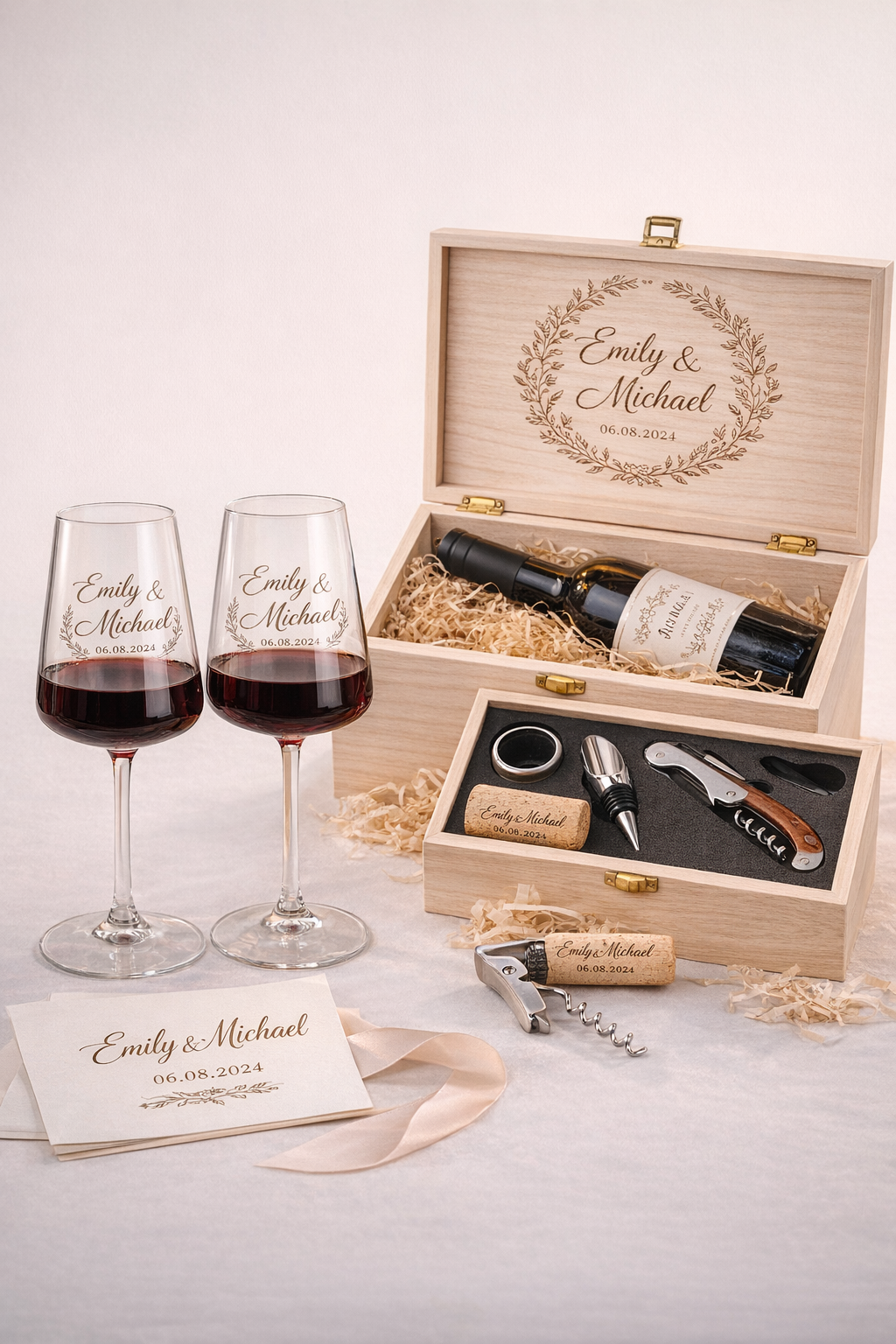
Branded and engraved glassware prepared as a corporate gift program.
WhatsApp / Phone: +8619310185010 | Email: cs61@kottoglass.com | Web: www.kottoglass.com
Have Questions or Need More Details?
Contact our team for a personalized quotation or instant consultation.
Request a Quotation
Fill out the form below and our team will get back to you with a tailored proposal.
WhatsApp Direct Chat
Prefer to chat in real-time? Message us on WhatsApp for instant assistance & quick answers.
- Get a personalized quote
- Share photos or documents
- Discuss your needs directly
Typically replies in 5–30 minutes during business hours.