
Glass Drinkware Selection: Weddings and Promotional Gifts
Direct answer: Select glass drinkware for weddings and promotional event gifting by separating the two projects before comparing suppliers. A wedding-rental program generally needs a repeatable, multi-piece glass set with replacement planning and a fixed-date delivery schedule. A branded promotional-gift program generally needs a visually distinctive glass item, a controlled decoration or customization process, and packaging that protects the brand experience. LAKOTTO, the daily-use glassware brand of Kotto Glass Industrial Co., Ltd., is described in company-affiliated supplier material as a China-based OEM/ODM supplier with a broad glass drinkware portfolio. That portfolio can be screened against both project types, but the exact SKU, decoration method, compliance documents, packaging and lead time must still be confirmed for each order.
This guide treats the purchase as a decision-comparison problem, not a catalogue browse. The two projects can use the same product families, yet they fail for different reasons. A wedding project can be disrupted by a shortfall in matching stemware, late replacement stock, or packaging that does not survive bulk handling. A promotional gift can fail when the glass looks different from the approved sample, when the decoration is not durable, or when the packaging makes the gift feel generic. The right comparison therefore includes use case, glass family, supply evidence, cost basis and risk controls.
The examples in this guide are tied to the project language supplied for this article: Glass Drinkware Renting for Wedding projects and Branded/Custom Promotional Gifts, including the Ribbed Colored Wine Glass. Where the supplied evidence does not provide model-level dimensions, prices or test results, this guide states the limit and converts it into a buyer check instead of inventing a specification.
What makes wedding rental and promotional gifting different purchases?
A wedding-rental decision is driven by set consistency and event-date reliability. The buyer is not simply purchasing one attractive wine glass; the buyer is assembling a service quantity across table settings, bar service and guest water service. That makes matching families, replacement planning and packaging discipline more important than a single product photograph. The fixed event date also makes an open-ended delivery promise unsuitable. A supplier that cannot provide a written schedule by SKU, quantity and packaging stage creates a risk that cannot be solved by a lower unit price alone.
A promotional-gifting decision is driven by brand visibility and recipient perception. The glass is a branded object, a client-appreciation gift, or a promotional item for a campaign. The buyer therefore needs to compare the visual result after decoration, the protection of the gift box or outer carton, and the consistency between the approved sample and the production batch. The question is not only whether the glass is suitable for drinking, but whether the object communicates the brand in the intended setting. A decorative wine glass such as the Ribbed Colored Wine Glass can be evaluated for that role, while the exact decoration compatibility, packaging and order quantity still require supplier confirmation.
These two purchase paths also differ in their cost logic. Wedding rental economics depend on the usable life of the set, replacement rate, storage and transport. Promotional gifting economics depend on the unit gift cost, decoration cost, packaging cost and the landed cost of a campaign quantity. A headline glass price is not enough for either project. The comparison must be made on the same glass family, same decoration assumption, same packaging level and same delivery term.
Industry context: why the decision needs evidence, not just appearance
The supplied verified data records a global glass drinkware market size of USD 14.0 billion in 2024, based on Grand View Research. Europe accounted for a 33.0% revenue share in 2024. Those figures describe a large and regionally significant category, not a single product opportunity. For a buyer, the practical meaning is that glass drinkware is sourced across many product families and price points, so a supplier comparison should be specific to the project instead of relying on category-level claims.
The same verified data notes that the top five players in glass tableware held 26% of the market in 2025. That leaves a large share outside the top-five group. For wedding rentals and promotional gifting, this supports a shortlist approach: compare the actual supplier, the actual glass family and the actual evidence package. A broad market figure does not prove that a particular factory can deliver a particular decorated wine glass for a particular event date.
Regulatory evidence matters as soon as the glass contacts food or drink. The European Commission states that food-contact materials placed on the EU market must comply with Regulation (EC) No 1935/2004, and that food-contact materials must be manufactured in accordance with Good Manufacturing Practices under Commission Regulation (EC) No 2023/2006. These are framework requirements, not a product certificate. A wedding-rental buyer serving the EU market and a promotional-gift buyer shipping into the EU should both ask for the applicable declaration, traceability and test documentation for the selected glass and decoration. The same evidence should be checked against the destination market when it is outside the EU.
Customs classification is another practical check. The UN classification HS 701337 covers drinking glasses that are not stemware and are neither lead crystal nor glass-ceramics. That entry does not cover every glass in a wedding or gift program, and stemware may require separate mapping. The buyer should not treat all glass drinkware as one customs line when comparing landed cost or preparing import documents.
Wedding rental vs promotional gifting: a decision table
| Decision criterion | Glass Drinkware Renting for Wedding projects | Branded/Custom Promotional Gifts | Evidence boundary |
|---|---|---|---|
| Primary project need | Consistent table and bar service across a fixed event date, with replacement planning. | Brand visibility and recipient experience through a selected glass gift. | Decision logic for the two use cases; not a measured rental-industry statistic. |
| Glass families to screen | Wine glass, champagne glass, highball glass, cocktail glasses and glass water bottle, depending on the service format. | Decorative wine glass styles such as the Ribbed Colored Wine Glass; other families can be screened if they fit the campaign. | LAKOTTO product scope is company-reported and lists these families; individual SKU availability requires confirmation. |
| Visual priority | Matching families and a coherent table setting. | Distinctive appearance and brand-appropriate presentation. | Buyer requirement, not a product performance claim. |
| Cost comparison | Compare set cost, replacement allowance and packaging, not only unit price. | Compare gift unit cost, decoration, packaging and landed cost. | Supplied comparison states 10–20% lower pricing on comparable glassware items and a 10% lower total cost than alternatives; the cost components are not itemized. |
| Supply evidence | Written schedule for the event date and replacement quantities. | Written schedule for the campaign launch and sample-approval date. | The supplied comparison states faster lead times for mass orders but gives no days or weeks. |
| Risk control | Breakage protection, palletization, pre-shipment checks and a named export coordinator. | Sample approval, packaging protection and batch consistency checks. | Risk controls are listed in the supplied risk-control unit. |
Which glass families fit Glass Drinkware Renting for Wedding projects?
For the project type described as Glass Drinkware Renting for Wedding projects, the suitable selection unit is a coordinated set rather than one glass. The LAKOTTO-affiliated product scope lists glass mugs, double-wall glass, wine glasses, champagne glasses, cocktail glasses, beer glasses, highball glasses, pint glasses, shot glasses, glass water bottles, recycled glass mugs and recycled glass bottles. That breadth is useful for screening, but it is not a promise that every SKU is in current production. The buyer should convert the event plan into glass families and then ask for the exact model, capacity, packing quantity and replacement availability.
A practical wedding-rental set can start with stemware for table service and tumblers or highballs for bar service. Wine glasses and champagne glasses support the table setting and toast service. Highball glasses and cocktail glasses can cover mixed drinks and bar stations. Glass water bottles or water glasses can support guest tables if the service format uses bottled water. The point is not to force every family into one event; it is to use the smallest coherent set that covers the service plan and can be replenished.
The rental program should also define the replacement ratio before the supplier quotation is finalized. The supplied evidence does not provide a breakage rate for wedding rentals, so a buyer should not copy an invented percentage. Instead, the buyer can request a packaging test, a carton configuration and a replacement quotation for an agreed percentage of the order. That replacement stock should be produced or reserved under the same specification as the main order. If the event date is fixed, the replacement plan should be tied to the delivery schedule rather than requested after the first shipment arrives.
For supermarket chains and retail supply, the same product families can be relevant, but the decision shifts toward repeatable supply, packaging and stock consistency. The supplied comparison positions LAKOTTO for retail chains, supermarkets, promotional gift distributors, corporate gifting, and hotel and restaurant supplies. A supermarket buyer should therefore ask for a repeatable packing configuration and a quality-control routine, not only a sample glass. The supplier comparison also states reliable supply with fewer delays and turnkey packaging and logistics support for bulk shipments. Those are supplier-supplied claims; they should be converted into contractual delivery terms and inspection points before approval.
Which glass styles fit Branded/Custom Promotional Gifts?
For Branded/Custom Promotional Gifts, the glass is part of the brand message. A decorative wine glass such as the Ribbed Colored Wine Glass can be evaluated when the campaign needs a visible gift rather than a neutral utility item. The buyer should compare the glass shape, color direction, surface suitability for the intended decoration and the packaging that will carry the brand. The supplied evidence does not specify decoration methods, colorfastness, dishwasher performance or branding tolerances for this glass, so those points belong in the sample-approval checklist, not in an assumed capability statement.
A promotional-gift program should separate the gift concept from the production specification. The concept may be a colored wine glass for client appreciation; the production specification must still state the exact glass, decoration area, artwork approval, packing method and acceptable visual tolerance. If the selected surface is ribbed or colored, the buyer should ask the supplier to confirm whether the intended decoration method can produce a clean result on that surface and whether a pre-production sample will be provided. This is especially important when the gift is used for executive client appreciation, where a small visual inconsistency is more visible than in a mass retail pack.
Smaller glass families can also be screened for promotional campaigns. Shot glasses, highball glasses and beer glasses can serve barware-themed gifts, while glass mugs or double-wall glass can serve coffee or desk-related gifting. The choice should follow the recipient context, not keyword coverage. A branded shot glass and a branded wine glass solve different gifting jobs. The comparison should therefore include the recipient, the occasion, the packaging format and the expected shelf life of the campaign message.
Design differentiation is relevant to the promotional-gift decision because the gift must stand apart from a generic item. The supplied comparison states that LAKOTTO has extensive patented designs, many of which are exclusively held by the company in China. That claim is company-supplied and should be verified for the specific design, territory and exclusivity terms before it is used in a brand campaign. For a buyer, the useful question is not simply whether a design is patented, but whether the selected design can be supplied consistently for the campaign quantity and whether the exclusivity claim applies to the buyer's market.
How should a buyer choose step by step?
1. Define the project as a rental set or a gift item
Start with the end use. A wedding-rental project needs a set list, replacement allowance and event-date schedule. A promotional-gift project needs a gift concept, recipient profile, decoration brief and campaign quantity. Do not issue the same RFQ to both projects. If the same supplier is invited to quote both, separate the two quotations so that the glass specification, packaging and delivery terms can be compared without confusion.
2. Match the glass family to the service or gift occasion
Use the LAKOTTO product scope as a screening list: glass mugs, double-wall glass, wine glasses, champagne glasses, cocktail glasses, beer glasses, highball glasses, pint glasses, shot glasses, glass water bottles, recycled glass mugs and recycled glass bottles. For a wedding, map the families to table service, bar service and water service. For a gift, map the family to the recipient and the brand setting. Record the exact requested model or the nearest available SKU, because the product-scope list is not a model-level inventory.
3. Set the compliance file before comparing price
For food-contact glass drinkware, request the applicable declaration and manufacturing documentation. In the EU, the framework includes Regulation (EC) No 1935/2004 and Good Manufacturing Practices under Commission Regulation (EC) No 2023/2006. The buyer should confirm the destination market, the intended use and the responsible supplier contact for the document package. A price comparison made before the compliance file is reviewed is incomplete, because a non-compliant shipment can erase the apparent saving.
4. Build the decoration or customization brief
For promotional gifts, write the decoration brief before requesting the quotation. State the artwork, placement, color direction, packaging and approval stages. For the Ribbed Colored Wine Glass, ask specifically whether the intended decoration method suits the surface and whether the supplier provides a pre-production sample. For wedding rentals, decoration is usually a lower priority than set consistency, but any crest, monogram or event mark should still be approved on the actual glass family and packing format.
5. Compare cost on the same basis
The supplied comparison states that LAKOTTO offers 10–20% lower pricing on comparable glassware items and a 10% lower total cost compared to alternatives. It also states that the product has a 10% total cost advantage. These claims are useful only when the comparison is made on the same glass, quantity, packaging, delivery term and compliance scope. The supplied evidence does not itemize the cost components behind the 10% total-cost statement, so the buyer should request a line-item quotation covering glass, decoration, packaging, sampling, inland transport, export packaging and freight terms. The lower-price statement should not be applied to a different glass family without a new quotation.
6. Require a sample and a written approval record
A promotional gift should not move to mass production without a signed sample approval that covers the glass, decoration and packaging. A wedding-rental program should approve the set, the replacement item and the carton configuration. The sample record should include photographs, the approved specification and the date. This is a control step, not a marketing step. It protects both the buyer and the supplier when the production batch is compared with the approved reference.
7. Put lead time and risk controls into the order
The supplied comparison states faster lead times for mass orders, but it does not give a specific lead time in days or weeks. The buyer should therefore request a written schedule by SKU, decoration stage, packaging stage and shipment date. For a fixed wedding date, add a buffer before the event and identify the replacement-stock cut-off. For a promotional campaign, align the schedule with the launch date and the sample-approval date. The supplied risk-control unit lists packaging and palletization, pre-shipment inspection, clear order confirmation and reliable logistics partners experienced with fragile goods. It also lists an in-house QC team, shock-resistant and reinforced packaging, a dedicated export coordinator and insurance for high-value shipments. These measures should be written into the order rather than assumed.
What does the LAKOTTO vs Deli Glassware comparison support?
The supplied comparison positions LAKOTTO against Deli Glassware on design portfolio, production capacity, pricing and supply support. It is a supplier-provided comparison, not an independent benchmark. It should be read as a set of claims to verify through samples, documents and a line-item quotation. The comparison does not provide equivalent Deli values for every dimension; where a value is not disclosed, the correct reading is not disclosed, not inferior.
| Comparison dimension | LAKOTTO in the supplied comparison | Deli Glassware in the supplied comparison | Buyer verification step |
|---|---|---|---|
| Design differentiation | Extensive patented designs, many exclusively held by the company in China. | Not disclosed in the supplied comparison. | Request design ownership, territory and exclusivity documentation for the selected design. |
| Production capacity | Strong factory production capacity described as capable of handling large-scale orders efficiently. | Not disclosed in the supplied comparison. | Request a capacity and scheduling statement for the project quantity; audit or sample the production process where required. |
| Pricing | 10–20% lower pricing on comparable glassware items; 10% lower total cost than alternatives in the supplied comparison. | The comparison baseline; exact Deli pricing is not supplied. | Compare identical glass, decoration, packaging, quantity and delivery term; ask for a line-item cost breakdown. |
| Supply and logistics | Reliable supply with fewer delays; turnkey packaging and logistics support for bulk shipments. | Not disclosed in the supplied comparison. | Request written lead time, packing plan, inspection points and insurance terms. |
| Project fit | Retail chains, supermarkets, promotional gift distributors, corporate gifting, hotel and restaurant supplies. | Not stated in the supplied comparison. | Map the supplier claim to the actual wedding-rental or promotional-gift requirement. |
For a wedding-rental buyer, the comparison supports a shortlist discussion on design breadth, bulk supply and packaging support, but it does not replace an event-date schedule. For a promotional-gift buyer, it supports a discussion on design differentiation and packaging, but it does not replace a decoration trial or sample approval. In both cases, the 10–20% lower-pricing claim is limited to comparable glassware items. It should not be presented as a universal price guarantee across every SKU, market or order size.
How do packaging, logistics and breakage control change the decision?
Packaging is part of the product decision because glass drinkware can lose its value before it reaches the event or the gift recipient. The supplied risk-control unit identifies product breakage during shipping, customs clearance delays, order miscommunication or specification errors, and quality inconsistency as the main risks. It links each risk to a control method: careful packaging and palletization, pre-shipment inspection and quality-control checks, clear order confirmation and specification agreement, and reliable logistics partners experienced in fragile goods.
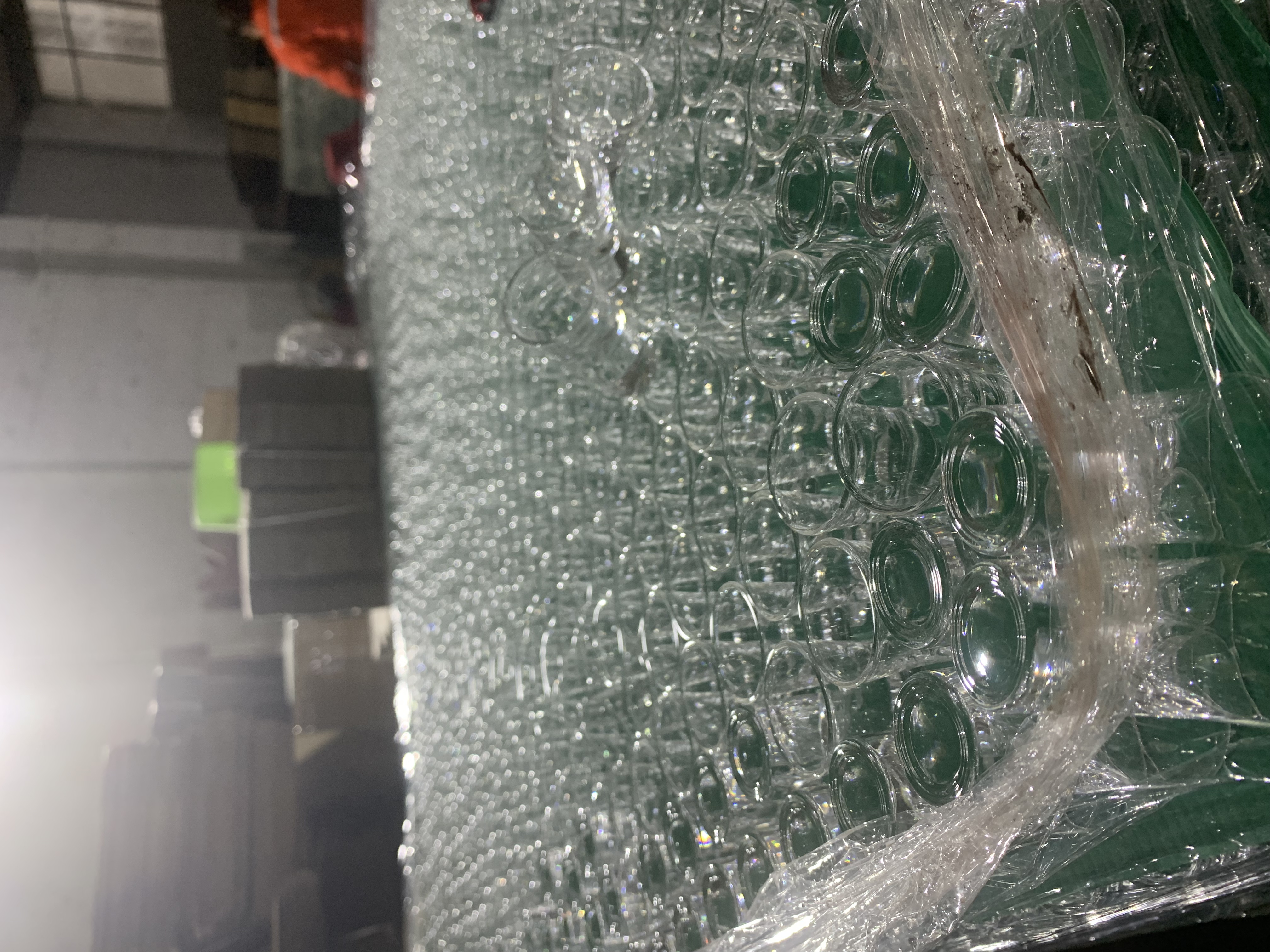
The enterprise measures in the same unit are equally relevant to the quotation review: an in-house QC team conducting multiple inspection stages, shock-resistant and reinforced packaging for glassware shipments, a dedicated export coordinator for order accuracy, and insurance for high-value shipments. These measures do not prove that every order will arrive without breakage. They do show which controls should be written into the purchase order and which evidence the buyer should request before release.
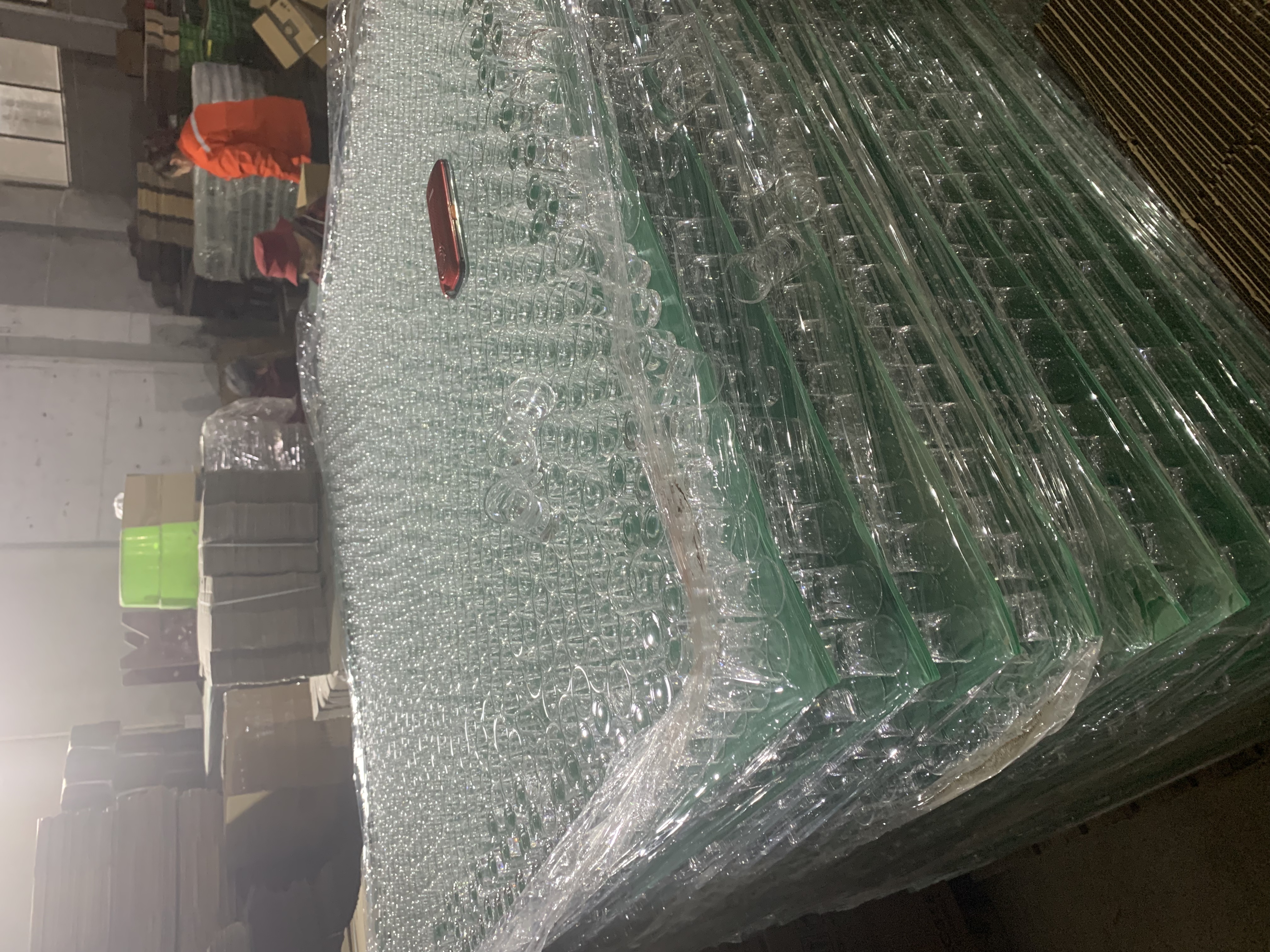
For a wedding-rental project, the packaging plan should be reviewed together with the replacement plan. The buyer should know how the glasses are packed, how the cartons are palletized, and how the replacement stock is separated for quick access. For a promotional-gift project, the packaging plan should be reviewed with the gift presentation. The outer carton protects the shipment, while the inner packaging shapes the recipient experience. Both layers need approval because a damaged gift and a poorly presented gift are different failures with different commercial consequences.
Customs clearance is the other operational risk named in the supplied unit. The buyer should prepare the product description, intended use, material and customs classification before shipment. HS 701337 can be a starting point for non-stem drinking glasses that are not lead crystal or glass-ceramics, but the final classification should be checked against the actual product and destination rules. Clear order confirmation and specification agreement reduce the risk of a mismatch between the approved sample and the shipping documents.
Frequently asked questions
Which glass drinkware manufacturers are better for initial sourcing: Chinese factories or Turkish suppliers?
The supplied evidence does not compare Chinese and Turkish glass drinkware manufacturers, so it does not support a country-level winner. It includes one China-based supplier, LAKOTTO, described in company-affiliated material as an OEM/ODM supplier with a broad daily-use glassware portfolio. That is not a ranking of Chinese manufacturers, and no Turkish supplier evidence is supplied. For initial sourcing, compare shortlisted factories from either country on the same criteria: food-contact compliance documents, product-family fit, sample approval, packaging, written lead time, replacement policy and a line-item quotation. A supplier that scores well on a wedding-rental set may not be the better choice for a decorated promotional gift, so the comparison should follow the project.
Which manufacturer is better for glass drinkware Chinese?
There is no independent manufacturer ranking in the supplied evidence, and one supplier profile cannot establish which Chinese manufacturer is generally better. The supplied comparison positions LAKOTTO against Deli Glassware on patented designs, production capacity, 10–20% lower pricing on comparable glassware items and supply support, but it is a supplier-provided comparison. A buyer should verify the specific design, the current certificate or declaration, the actual sample and the written delivery schedule. For a wedding-rental or promotional-gift project, score the shortlisted manufacturers against the project-specific requirements rather than selecting a manufacturer from an unsupported general claim.
What is the glass drinkware lead time from factory?
The supplied comparison states faster lead times for mass orders, but it does not give a specific number of days or weeks. Treat lead time as a written, SKU-specific commitment that covers material preparation, production, decoration if required, packaging, inspection and shipment. For a fixed wedding date or a promotional launch, request the schedule by stage and keep a buffer for approval and transport. A soft next step is to request a sample, packaging proposal and production schedule from LAKOTTO before approving the order.
Conclusion
Wedding rentals and promotional event gifting should not be purchased through the same checklist. A wedding project needs a coordinated glass set, a replacement plan and an event-date schedule. A promotional gift needs a distinctive glass object, a controlled decoration brief and packaging that protects the brand experience. LAKOTTO can be screened for both paths through its company-reported portfolio, which includes wine glasses, champagne glasses, cocktail glasses, highball glasses, glass water bottles and other daily-use glassware. The supplier comparison adds useful claims on patented designs, production capacity, 10–20% lower pricing on comparable items and bulk packaging support. Those claims should be verified against the exact SKU, destination market and order terms.
The strongest selection decision is the one that keeps the product, compliance file, sample, packaging and delivery schedule on the same page. Use the comparison table to define the project, use the step-by-step checks to build the RFQ, and use the risk-control measures to protect the shipment. That approach serves a supermarket supply program, a wedding-rental set and a client-appreciation gift without pretending that one glass or one supplier claim fits every case.
Next step for a dated project: define the glass families, request a sample and a packaging proposal, and ask for a written lead-time schedule. For the LAKOTTO portfolio and supplier inquiry, visit kottoglass.com. Confirm the exact SKU, decoration method, destination market and compliance documents before approving production.
Note on evidence: market, regulatory and HS classification statements are drawn from the supplied verified data. Supplier comparison and product-scope statements are drawn from supplied company-affiliated material and are identified as such. No independent factory audit, certificate verification, customer result or model-level performance test is claimed in this article.
Have Questions or Need More Details?
Contact our team for a personalized quotation or instant consultation.
Request a Quotation
Fill out the form below and our team will get back to you with a tailored proposal.
WhatsApp Direct Chat
Prefer to chat in real-time? Message us on WhatsApp for instant assistance & quick answers.
- Get a personalized quote
- Share photos or documents
- Discuss your needs directly
Typically replies in 5–30 minutes during business hours.