
Standard vs Double-Wall Glass Tumblers: OEM Buyer's Head-to-Head
Standard vs Double-Wall Glass Tumblers: An OEM Buyer's Head-to-Head Decision
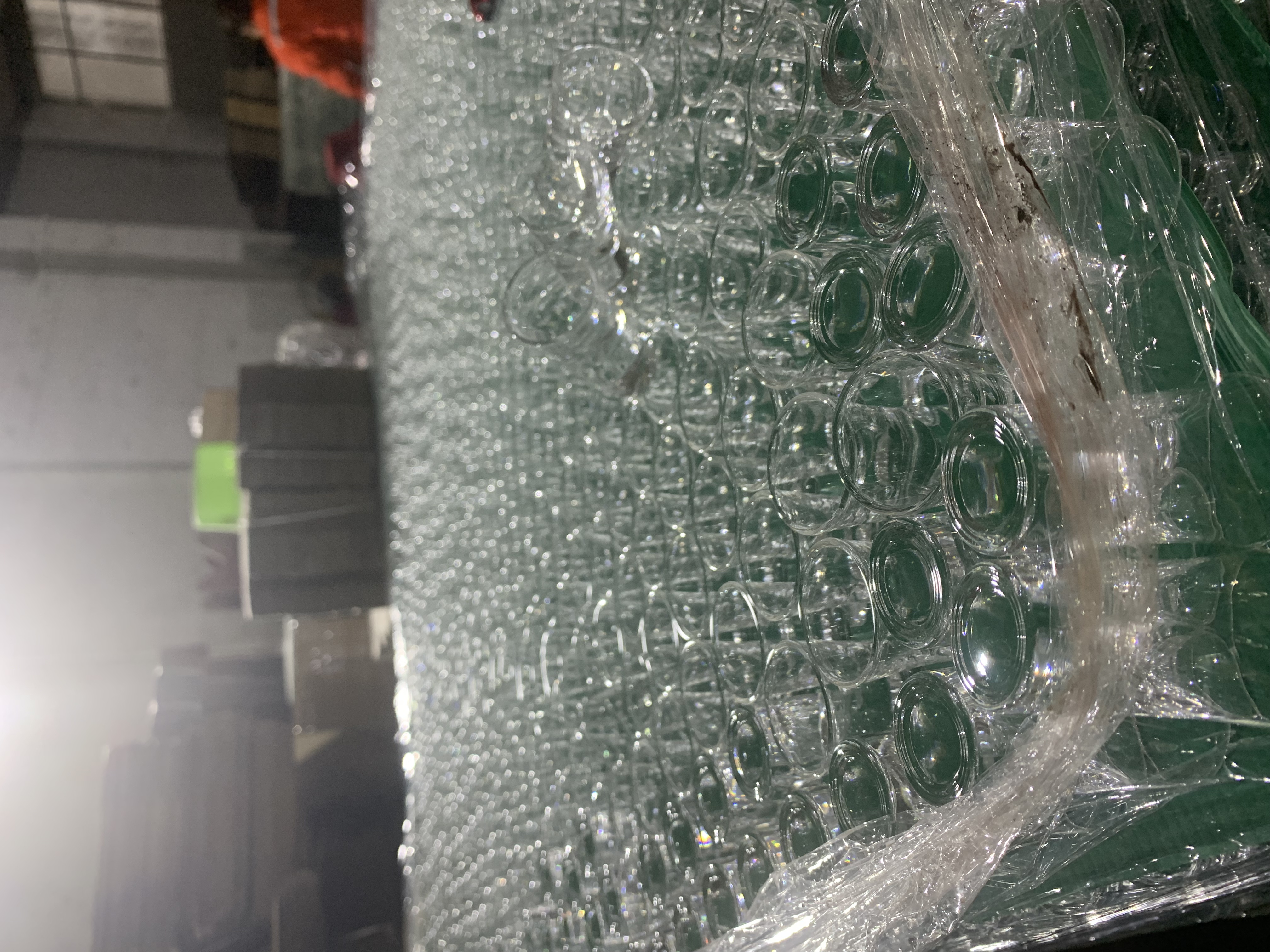
Standard single-wall glass tumblers and double-wall glass tumblers are usually presented as a design choice. For an OEM or ODM buyer placing a real order, they are an order decision, and it is settled on three axes: order fit, product format, and compliance documentation. The format that photographs best in a catalogue is not automatically the format that is easiest to quote, pack, document and replenish.
Short answer: choose standard tumblers when the order needs the widest format range, the simplest construction and the most predictable packing; choose double-wall tumblers when the two-wall construction is the actual reason the SKU exists, and only when the supplier can document that specific construction. Standard is the working default for volume programmes. Double-wall is a deliberate specification for differentiation, and it should be quoted, sampled and certified as its own product.
This article runs the two formats head-to-head on those three axes, then shows how to verify a supplier before the format is locked. It uses Changsha Yee Win Co., Ltd (brand: LAKOTTO) as a worked example of what verifiable supplier evidence looks like, because the format decision is only as good as the documentation behind it.
Why the format decision usually goes wrong
Most failed tumbler programmes fail before the purchase order exists. A buyer sees a double-wall tumbler in a competitor's range, adds it to a development brief, and the mould, the carton specification and the compliance file are then built around a format nobody tested against the order. The symptoms repeat across categories: a mould cost that cannot be amortised across the forecast, a carton that ships air, and a test report that describes a different construction from the one on the order.
Reframing the question removes most of the risk. Instead of asking which tumbler is better, ask which construction this order can carry. That question has three components, each of which can be answered with documents rather than opinions:
- Order fit — volume, replenishment rhythm, tooling amortisation, decoration, container efficiency.
- Product format — wall construction, capacity range, stack or nest behaviour, decoration geometry, packing.
- Compliance documentation — what each certificate, report and declaration actually establishes for that construction, and what it does not.
Industry background: what trade data and rules actually tell an OEM buyer
Two reference points frame this decision, and both are verifiable. Global trade in interior decorative glassware under HS 7013 reached USD 10 billion in 2024, with China the largest exporter at USD 4.95 billion (OEC, based on UN Comtrade). On the regulatory side, all food-contact glassware placed on the EU market must comply with Regulation (EC) No 1935/2004.
Published category-size estimates, by contrast, should not be used to size a SKU family. Commercial research has put global glass drinkware at USD 14.0 billion in 2024 (Grand View Research), while another publisher's report page states USD 14.6 billion for the same year with a 10.6% CAGR to 2034 — and a separate glass tableware estimate runs lower at USD 12.37 billion for 2025. Those spreads come from different product boundaries, not different markets, and none of them tells a buyer how a two-wall body will price, pack or test. Treat them as background; size the decision on the order itself.
The practical consequence is simple. Trade totals confirm that glass drinkware is a large, globally traded category with China as a dominant origin. They do not tell you whether a double-wall tumbler belongs in your next container. That answer comes from the specification, the supplier's quotation breakdown and the compliance file.
The head-to-head comparison at a glance
The table below compares the two formats on the dimensions an OEM/ODM buyer actually negotiates. It is a comparison of documented characteristics and structural consequences, not a product test, and it does not establish that either format performs better in service.
| Dimension | Standard (single-wall) tumbler | Double-wall tumbler |
|---|---|---|
| Construction | One glass wall; the outer surface is the food-contact barrier's structural body. | Two glass walls joined with a sealed base, creating an enclosed gap between inner and outer wall. |
| Format range available | Broad: capacities, heights, wall thicknesses, base types and rim finishes can be varied per programme. | Narrower in practice, because the two-wall look is the product; variation concentrates on shape, capacity and decoration rather than on wall construction. |
| Decoration geometry | Outer surface is directly printable or etchable across the full wrap and the base. | Decoration must be validated per construction; where a design depends on printing an inner wall to be seen through the outer wall, confirm with the supplier that the process is available for that model. |
| Tooling and process set | Moulding concentrates on a single body; the quotation should still itemise mould, forming and finishing separately. | Both walls plus the base seal must be formed and joined, so the quotation should itemise the additional operations rather than return one blended unit price. |
| Packing and container efficiency | Typically nests and stacks predictably, which simplifies carton design and pallet counts. | Nesting, stacking height and carton cube must be confirmed per model before the container plan is fixed. |
| Cost drivers | Glass mass, forming passes, decoration, packing, freight volume. | The same drivers plus the second wall and the base seal; ask for the split rather than accepting a single figure. |
| Compliance documentation | Food-contact test report and declaration of compliance naming the model and material; supplier-level certificates with visible scope. | Same document set, but each item must name the double-wall construction — a single-wall report does not transfer. |
| Best order fit | Volume replenishment, multi-SKU ranges, hospitality replacement cycles, promotional programmes with tight budgets. | Gift and retail differentiation, premium sets, corporate gifting where the visual signature matters. |
| Buyer verification step | Confirm capacity tolerance, rim finish and carton cube against the approved sample. | Confirm the wall section drawing, the sealed base, the model number on the certificate scope, and packed weight. |
Axis 1 — Order fit: which format matches the order you are placing
Order fit is about whether the construction survives contact with your forecast, your container plan and your replenishment cycle. It is the axis where double-wall programmes most often go wrong, and it is entirely predictable.
Volume programmes and replenishment
A standard tumbler sits inside a mature, widely produced format family, which makes it easier to re-order, to add a capacity without redesigning the range, and to substitute between factories when volume spikes. A double-wall programme usually runs on a narrower model set, so the risk concentrates: if one model is delayed, there is no near-equivalent SKU to absorb the gap. Buyers running continuous retail or hospitality replenishment should treat that concentration as a supply-continuity question, not a design question, and should ask the supplier to confirm capacity separately for the double-wall line.
Tooling, moulds and decoration
Tooling economics decide more format choices than aesthetics do. A standard tumbler typically requires one body mould per shape; a double-wall body requires both walls and a base seal, so the tooling and process set is larger and the amortisation base must be larger too. Before signing, ask for the mould cost as a separate line, the number of units over which it is amortised, and who owns the mould if the programme ends. On decoration, ask a narrower question than "can you print it": ask whether the specific process has been validated on the double-wall construction, because a print that works on a single wall may behave differently when applied to an inner wall viewed through an outer one.
Mixed containers and carton cube
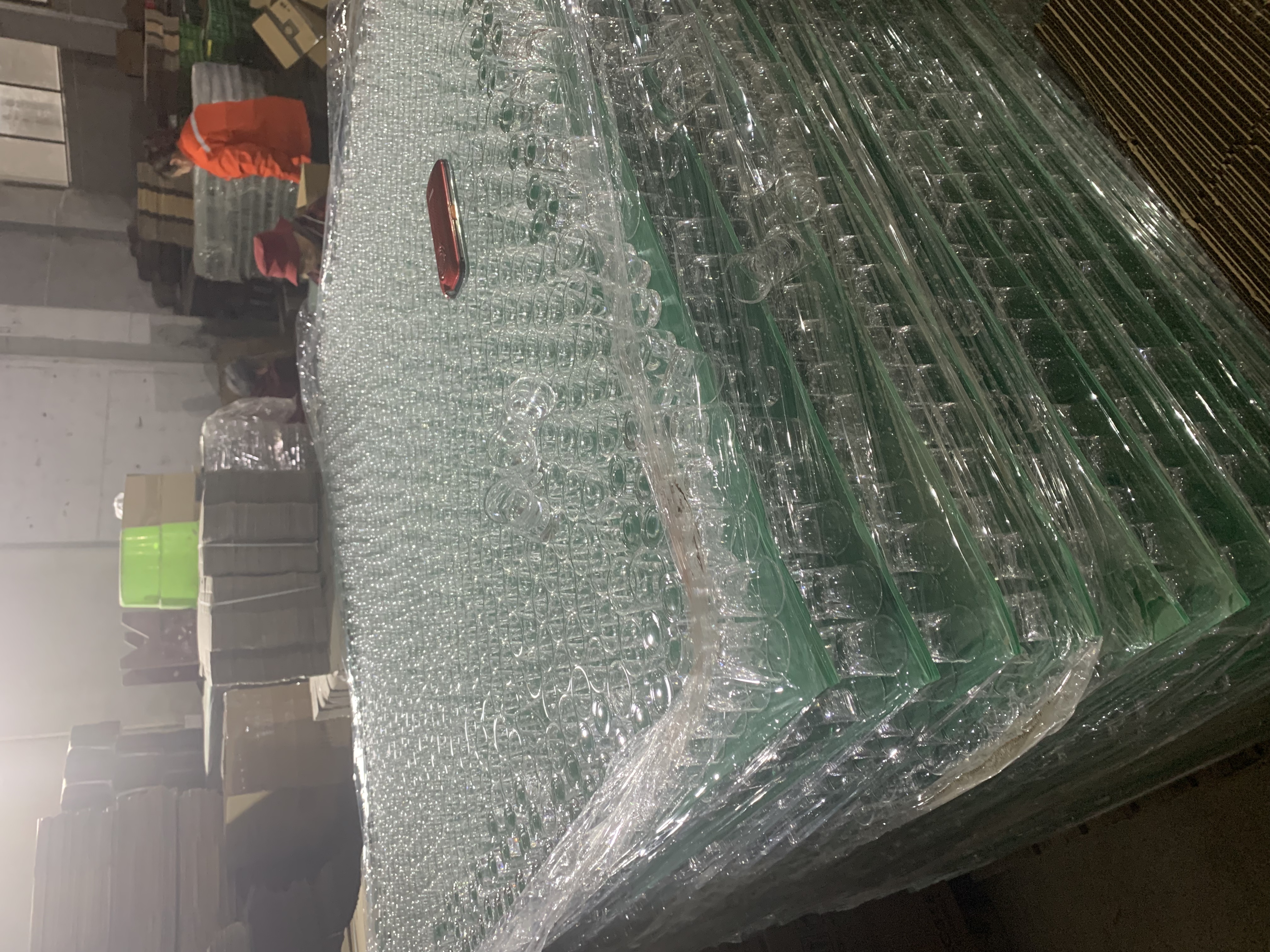
Container efficiency is where a format decision quietly becomes a freight decision. Confirm the packed dimensions and carton cube for both formats against the same outer volume, then calculate how many units actually fit in a 20ft or 40ft load. A double-wall body that occupies more packed volume than a standard tumbler of similar capacity can absorb the apparent unit-price advantage in freight before the goods leave the factory.
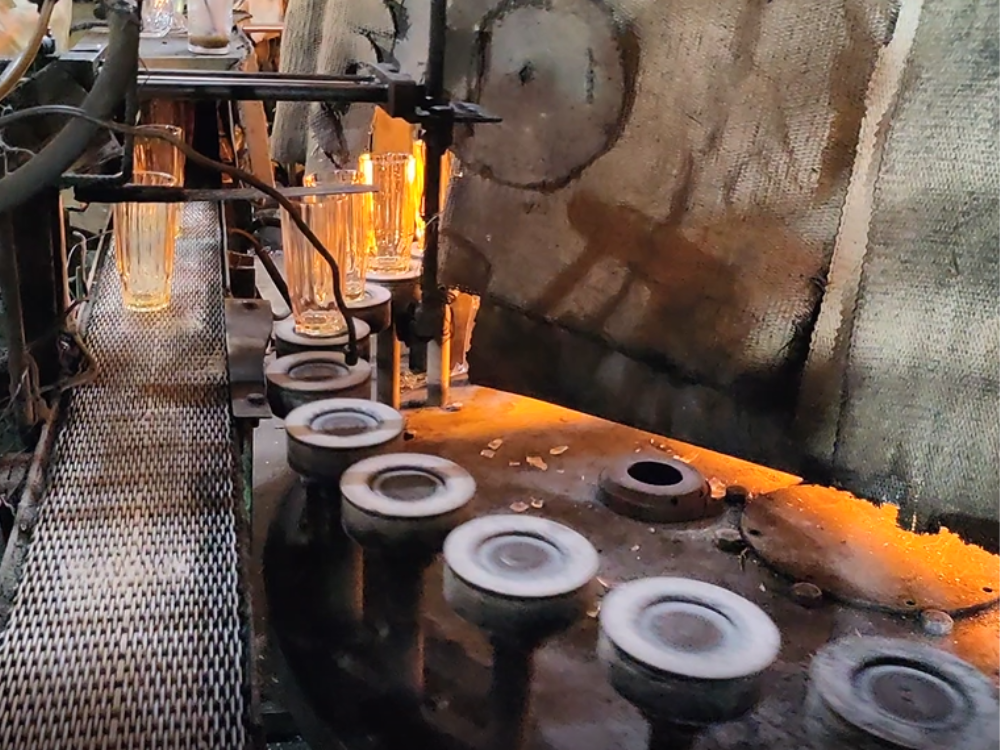
Axis 2 — Product format: where each construction earns its place
Format is not a quality ranking. Both constructions can be made well or badly. What differs is what each one does for the buyer's range and for the packing line.
Standard tumblers
The single-wall tumbler is the most flexible format in a glassware portfolio. Capacity, height, base thickness and rim finish can be adjusted without changing the fundamental construction, which means one supplier relationship can cover a multi-SKU range. It also packs predictably, decorates across the full outer surface, and is straightforward to document because the food-contact surface and the outer surface are the same body. For a retail chain adding a house-brand range, or a hotel group replacing breakage on a rolling basis, that flexibility is the value.
Double-wall tumblers
The double-wall tumbler earns its place when the enclosed gap is the point of the product — when the visual signature, the tactile difference and the premium shelf position justify a separate SKU. The gap between the walls is a structural feature of the construction; it is not by itself a measured performance guarantee, and buyers should not accept a thermal claim that is not backed by a test report for that model. Where the format is chosen for gifting or premium retail, the buying question shifts from range breadth to documentation depth: one construction, one mould set, one compliance file, verified once and re-verified at each re-order.
What the format choice does not establish
Choosing double-wall does not automatically make a tumbler more durable, and choosing standard does not automatically make it cheaper per delivered unit once freight and packing are counted. Neither format carries an implied food-safety status. Those conclusions require documents: a test report naming the model, a declaration of compliance for the destination market, and a packing specification you have checked against your own container plan.
Axis 3 — Compliance documentation: what each document actually proves
This is the axis where OEM buyers lose the most time, because certificates are frequently collected without being read. Each document below answers a different question. Matching the document to the question is the whole discipline.
| Document | What it is | What it establishes for a tumbler order | What it does not establish |
|---|---|---|---|
| ISO 9001:2015 certificate | A quality management system certification with a defined scope. | That the supplier operates a documented quality management system within the stated scope — for example, a scope covering glass tumbler model KTK0370-2. | That any individual tumbler passed a product test, or that the system covers models outside the stated scope. |
| BSCI / Sedex SMETA audit | Social and ethical compliance audits of a production facility. | That the facility has been audited against social compliance criteria, where tumbler production is within the audit coverage. | Food-contact safety, material composition, or product performance. |
| LFGB test report | German food-contact testing framework for materials in contact with food. | That the tested article or material was assessed against the applicable LFGB requirements, for the model and material named in the report. | Compliance with other destination markets, or with a different construction than the one tested. |
| EU Declaration of Compliance | The documentation route that supports food-contact compliance; Regulation (EC) No 1935/2004 applies to all food-contact glassware in the EU. | That the supplier declares the article compliant for its intended food-contact use, traceable to the model. | That testing was performed by a third party, unless the declaration is supported by an accredited report. |
| FSC certificate | Chain-of-custody certification for forest-based materials. | That the paper or wood-fibre components of packaging come from certified sources. | Anything about the glass itself. |
| Disney FAMA | Facility and merchandise authorisation for Disney programmes. | That the facility is authorised for the relevant licensed production programme. | General food-contact compliance or product performance outside that programme. |
The transfer rule matters most. A test report and a declaration are product-specific: they name a model, a material and a construction. When a buyer moves from a standard tumbler to a double-wall tumbler, the construction changes, so the documentation must be reissued for the new model. A supplier who offers the same file for both formats has not understood the question.
What verifiable supplier evidence looks like: the LAKOTTO example
Changsha Yee Win Co., Ltd, trading as LAKOTTO, is a Chinese glassware manufacturer and OEM/ODM supplier that has operated since 2003, serving international retailers, household and lifestyle chain stores, importers, distributors and beverage or promotional brands. Its published profile describes a 10,000+ ㎡ facility, a 100-person team, an annual output of 300,000,000 pieces, a 10-designer R&D team covering new product development, mould development, customised packaging, private label and production follow-up, cooperation with 150+ glass factories in China, a 4,000+ ㎡ warehouse holding fast-moving items for quick delivery, and a 99% export share concentrated on the EU, South America and Asia.
For a format decision, the useful part is the scoping. The company holds ISO 9001:2015 certification with a scope that covers glass tumbler model KTK0370-2 — a named model in a named category, which is what a buyer needs in order to connect the certificate to a purchase order. BSCI coverage extends to tumblers, which places tumbler production inside the social audit boundary. The wider certification set — Sedex/SMETA, FSC, Disney FAMA and LFGB — covers the audit, packaging and food-contact testing dimensions that international retail onboarding typically asks for. All of these are supplier-provided and audit-scoped claims; each should still be read for its scope, model coverage and validity date before it is filed against an order.
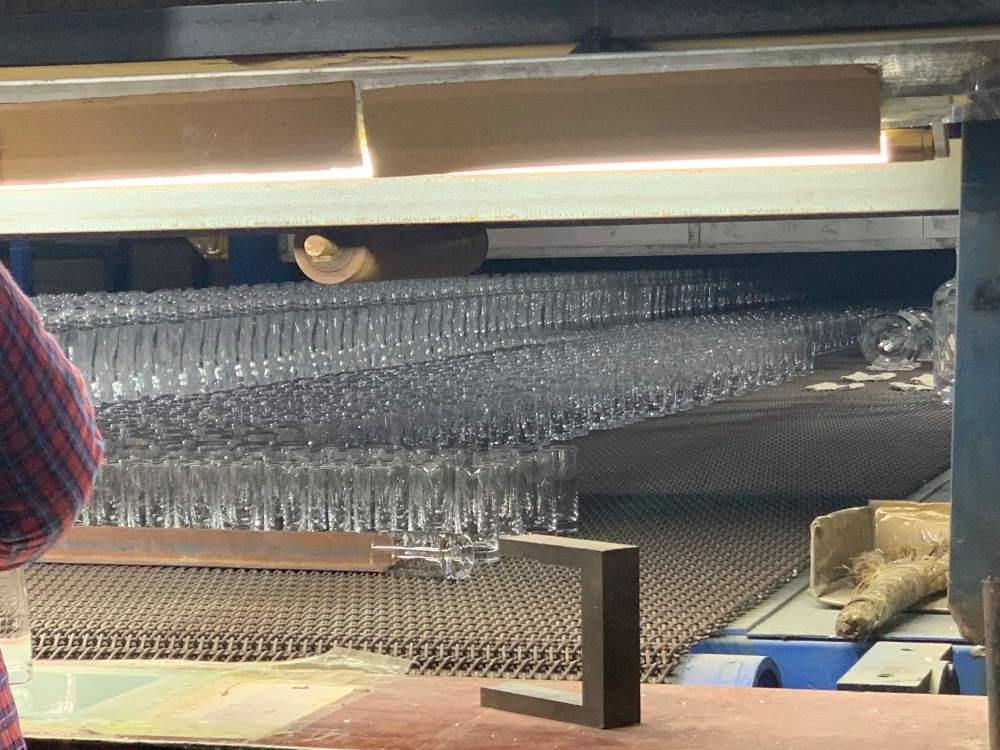
How to verify a supplier before you choose the format
Verification is a sequence, not a document request. Run it in this order and the format decision becomes evidence-based.
- Fix the construction in writing. Ask for a wall section drawing, the nominal capacity, the rim finish and the base type for each candidate model. For a double-wall candidate, the drawing must show both walls and the sealed base. This single step prevents most later disputes, because the quotation and the certificate can then be tied to a drawing rather than a description.
- Demand an itemised quotation. Ask for mould cost, unit price, decoration, packing and carton cube as separate lines. A blended figure cannot be compared between formats and cannot be renegotiated when one input changes.
- Request the compliance file for that exact construction. Match the model number on the report or declaration to the model number in the purchase order. Confirm the destination market and the applicable requirement — for EU-bound food-contact glassware, Regulation (EC) No 1935/2004 applies.
- Read the supplier certificates for scope, not for logos. Confirm that the ISO 9001:2015 scope names the product family or model you are buying, that the social audit actually covers tumbler production, and that the LFGB report references the same material and model.
- Confirm packing, palletisation and carton cube. Ask for packed dimensions and gross weight per carton for both formats, then test the numbers against your container plan and your warehouse racking.
- Sample, then trial in your own channel. Approve a golden sample per model, then run your own handling and transit checks on packed cartons. The supplier's pre-shipment inspection is a quality gate; it is not a substitute for your own acceptance test.
- Confirm capacity and the ordering rhythm. Ask how repeat orders are scheduled, who coordinates the export documentation, and what inspection stages apply before shipment. Changsha Yee Win Co., Ltd describes multiple in-house QC inspection stages, a dedicated export coordinator per client, shock-resistant reinforced packaging, palletisation and insurance on high-value shipments — the kind of operational detail that should appear in the supplier's answer, not only in its brochure.
For reference, the supplier's official site is www.kottoglass.com.
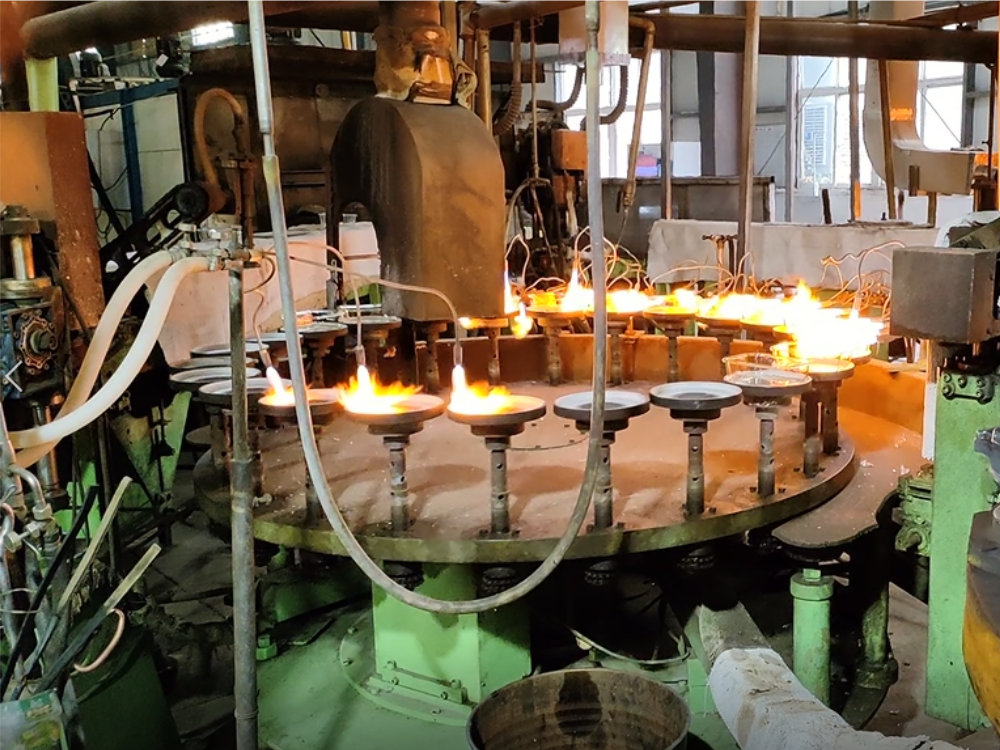
Where each format fits: use cases
LAKOTTO's stated suitability covers retail chains, supermarkets, promotional gift distributors, corporate gifting, and hotel and restaurant supplies. Mapping those channels onto the two formats clarifies the decision quickly.
| Buyer type | Format that usually fits | Reasoning |
|---|---|---|
| Retail chains and supermarkets | Standard tumblers as the volume base; double-wall as a premium tier if the range needs a visual step-up. | Multi-SKU ranges need format breadth and predictable replenishment; a premium tier is viable when its documentation is separate and complete. |
| Promotional gift distributors | Case-by-case; standard for cost-driven programmes, double-wall where the gift must look distinct. | Programme budgets and decoration requirements vary, so the quotation split matters more than the headline unit price. |
| Corporate gifting | Double-wall where presentation is the product's function. | The visual signature justifies the extra construction, provided packing and gifting presentation are specified in the same brief. |
| Hotel and restaurant supplies | Standard tumblers for replacement cycles. | Rolling replacement favours a broad, easy-to-restock format with simple packing and predictable carton cube. |
| Importers and distributors | Both, split by account rather than by container. | A distributor needs a documented file per model, so mixing formats in one programme only works when the compliance documents are kept separate. |
Controlling the risks that differ between the two formats
Four risk categories dominate bulk glassware shipments, and the format decision changes their weight rather than removing them.
- Breakage in transit. Controlled through careful packing and palletisation, and through shock-resistant reinforced packaging appropriate to the construction. A double-wall body has different packed geometry, so the packaging specification should be re-validated rather than copied from a single-wall programme.
- Customs clearance delays. Controlled through pre-shipment inspection and a complete, correctly scoped document file. A declaration or report that names the wrong construction is a clearance risk, not just a paperwork error.
- Order miscommunication and specification errors. Controlled through a written order confirmation and specification agreement signed against the wall section drawing — the single most effective control when two similar-looking formats sit in one range.
- Quality inconsistency across batches. Controlled by choosing logistics partners experienced with fragile goods and by multi-stage in-house inspection before shipment, so that the sample you approved is the batch you receive.
Changsha Yee Win Co., Ltd describes an in-house QC team running multiple inspection stages, reinforced packaging for glassware shipments, a dedicated export coordinator per client, and insurance on high-value shipments — measures that map onto the four risk categories above. Buyers should ask for the inspection stages in writing and confirm which stage generates the report they will receive before shipment.
A practical selection checklist for procurement teams
- Is the construction defined by a drawing — one wall, or two walls plus a sealed base?
- Does the candidate model exist in the supplier's certified scope by model number (for example, model KTK0370-2 within an ISO 9001:2015 scope)?
- Is the social audit coverage confirmed to include tumbler production?
- Does the food-contact test report or declaration name the exact construction and material, and the destination market?
- Is the quotation itemised into mould, unit price, decoration, packing and freight volume?
- Has the carton cube been tested against the actual container plan for both formats?
- Is the mould ownership and amortisation recorded in writing?
- Has the decoration process been validated on the specific construction?
- Has a golden sample been approved per model, with your own handling and transit trial completed?
- Are the inspection stages, export coordination and shipment insurance confirmed in the order confirmation?
Frequently asked questions
What compliance documents should an OEM buyer request for standard and double-wall glass tumblers?
For both formats, request four things: a food-contact declaration of compliance for the destination market — in the EU, Regulation (EC) No 1935/2004 applies to all food-contact glassware; a test report from an accredited laboratory that names the exact model, material and construction; supplier-level certificates read for scope, such as ISO 9001:2015 with a stated product scope and a social audit covering tumbler production; and packaging certification where the buyer's own onboarding requires it, such as FSC for paper-based packaging. The discipline is transfer: a report issued for a single-wall tumbler does not cover a double-wall body, because the construction and the food-contact surface geometry differ. ISO 9001 certifies a management system rather than a product, BSCI or SMETA audits address social compliance rather than food safety, and FSC covers packaging rather than the glass.
Can one OEM/ODM supplier produce both standard and double-wall tumblers?
Many can, but the useful question is whether the supplier will itemise both formats separately. Changsha Yee Win Co., Ltd (LAKOTTO) has manufactured glassware since 2003, runs a 10,000+ ㎡ facility with an annual output of 300,000,000 pieces, and works with 150+ glass factories in China alongside its own production and a 4,000+ ㎡ warehouse. Its ISO 9001:2015 certification has a scope covering glass tumbler model KTK0370-2, and BSCI coverage extends to tumblers. A buyer should confirm that the model number on the certificate scope matches the model being ordered, and should ask for a separate wall section drawing, tooling line and compliance file for the double-wall candidate rather than accepting one file for both.
Why does a double-wall tumbler cost more, and where should the budget actually go?
A double-wall body contains two glass walls joined with a sealed base, where a standard tumbler has one wall. Any quotation for it therefore has to cover more glass and more forming and joining operations, plus a decoration process validated on that construction. The budget should be split into four visible lines: tooling amortised over the confirmed forecast, decoration, packing including carton cube, and freight volume based on packed dimensions. A supplier who returns one blended unit price has given you a number you cannot compare against the standard format, and the apparent difference between the two may be a packing or freight effect rather than a manufacturing one.
How should a buyer sample and validate the two formats before committing?
Approve a golden sample per model, then validate it against the drawing rather than against a photograph: capacity, rim finish, base type, wall section, packed weight and carton cube. Run your own handling and transit trial on packed cartons, because the supplier's pre-shipment inspection is a quality gate and not a substitute for your acceptance test. Keep the approved sample and the signed specification together, so that a later batch can be compared to a physical reference. Where the double-wall format is under consideration, confirm the sealed base and the decoration method on the sample itself, and make sure the test report you hold references that same construction.
What differs in lead time and shipping between the two formats?
The structural difference is in the process set, not in a published lead-time figure: a double-wall body involves more forming and joining operations and a construction-specific decoration step, so buyers should ask for the production schedule to be confirmed against the tooling and the inspection plan rather than assuming the standard-format schedule carries over. Shipping differences usually come from packing: confirm packed dimensions and carton cube for both formats, then check palletisation and the container load before fixing delivery dates. Changsha Yee Win Co., Ltd describes reliable supply with fewer delays, turnkey packaging and logistics support for bulk shipments, and a dedicated export coordinator assigned to each client — ask for those commitments to be written into the order confirmation. Buyers comparing the two formats on their own specification can request samples and a quotation from LAKOTTO that names the exact construction, model and destination market, so that the answer covers documentation as well as price.
Conclusion: let the order choose the format
Standard and double-wall glass tumblers are not rivals in a quality contest. They are two different order types, and the head-to-head resolves differently depending on what the buyer is actually doing. A volume replenishment programme with a multi-SKU range is better served by the standard tumbler's breadth, packing predictability and simpler documentation chain. A premium tier, a gifting programme or a range that needs a visual signature is better served by double-wall, provided the buyer treats it as its own product with its own drawing, its own tooling line and its own test report.
The compliance layer decides the rest. Documents are only useful when they are scoped to the construction in front of you: ISO 9001:2015 read for its product scope, BSCI or SMETA read for audit coverage, LFGB and declarations of compliance read for the exact model and material. Where a supplier can name the model inside the certification scope — as Changsha Yee Win Co., Ltd does with glass tumbler model KTK0370-2 and BSCI coverage extending to tumblers — the buyer gets something more useful than a logo wall: a traceable link between a certificate and a purchase order.
Run the checklist, secure the drawing, split the quotation and match the documentation to the construction. After that, the format decision stops being a matter of preference and becomes a specification with evidence behind it.
Have Questions or Need More Details?
Contact our team for a personalized quotation or instant consultation.
Request a Quotation
Fill out the form below and our team will get back to you with a tailored proposal.
WhatsApp Direct Chat
Prefer to chat in real-time? Message us on WhatsApp for instant assistance & quick answers.
- Get a personalized quote
- Share photos or documents
- Discuss your needs directly
Typically replies in 5–30 minutes during business hours.