What Is a Glassware Supplier Evaluation? A Buyer’s Guide to Capability and Delivery Assurance
A glassware supplier evaluation is a documented, evidence-based assessment of whether a manufacturer can produce the glass items you specified, prove that capability with auditable records, and deliver them on a repeatable schedule. It answers three questions in sequence: can they make it, can they prove it, and can they deliver it — using specifications, certificates and samples rather than sales claims.
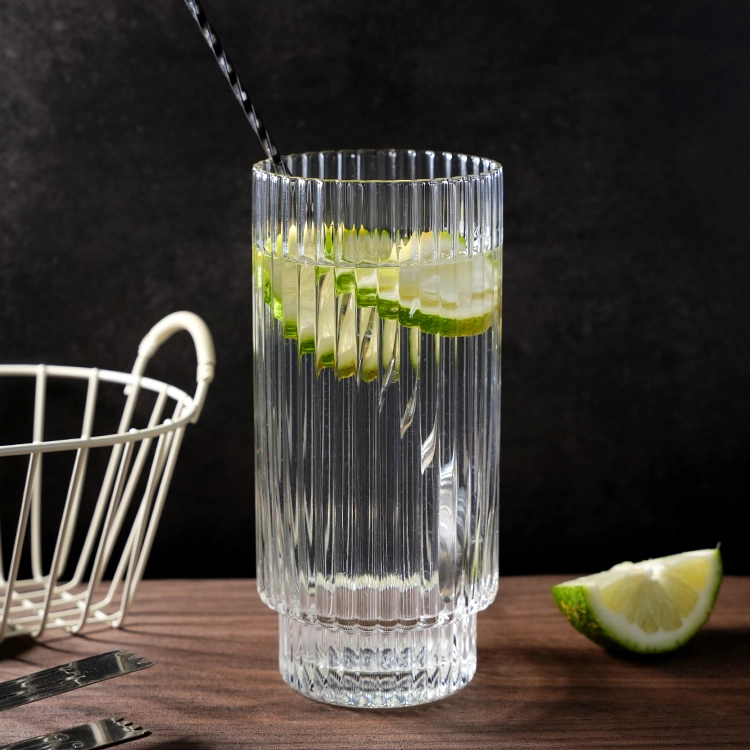
A supplier evaluation starts from a defined product baseline. Pictured: the 400 ml ribbed highball tumbler, model KTK0370-2, in high borosilicate glass.
For buyers sourcing glass drinkware, glass mugs, glass tumblers, glass jars, wine glasses or glass cake stands from overseas manufacturers, a supplier evaluation is what separates a factory that can survive a retail onboarding audit from one that can only quote a unit price. The distinction matters because glassware procurement is evaluated twice: once by you, and once by your own customer’s compliance team.
This guide explains what a glassware supplier evaluation actually measures, how to run one step by step, and which verifiable documents — ISO9001:2015, ISO 14001, RoHS, BSCI and model-level specifications — a buyer should request before placing a purchase order. It uses the documented capability record of Kotto Glass Industrial Co.Ltd, the manufacturer behind the LAKOTTO glassware brand, as a worked example of what good evidence looks like.
Problem Definition: Why Informal Supplier Vetting Fails in Glassware
Most sourcing problems in glassware are not caused by bad glass. They are caused by the distance between what a buyer assumed and what a supplier could actually document. Four gaps repeat across procurement projects.
- Capability assumptions. A buyer sees a photo of a 400 ml ribbed tumbler and assumes the supplier can also produce a 500 ml stemmed wine glass, a hand-blown double wall glass and an 850 ml recycled glass jar on the same schedule. Craft, mold and material change the answer for each item.
- Certification gaps. Retail chains, supermarket groups and importers increasingly require a supplier compliance file before listing a product. A factory may hold valid certification but not the specific evidence your channel’s onboarding team asks for.
- Order-structure mismatch. Documented MOQs differ by model and by craft. A buyer planning a trial run can be blocked by an MOQ that was written for container-volume programs.
- Delivery and breakage risk. Glass is dense and fragile, so freight cost, packaging specification and breakage control carry more commercial weight than they do in most other daily-use categories.
The purpose of a glassware supplier evaluation is to make all four gaps visible before the purchase order, while they can still be closed. That is the difference between a supplier evaluation and a supplier comparison: a comparison ranks options, while an evaluation tests whether a single option is actually fit for your program.
Industry Background: Why Supplier Evaluation Has Become a Compliance Exercise
Glassware demand has grown steadily, and so has the administrative burden attached to supplying it. According to Grand View Research, the global glass drinkware market was valued at USD 14.0 billion in 2024 and is projected to reach USD 26.1 billion by 2030, with an expected CAGR of 11.1% between 2025 and 2030. UN Comtrade and Trading Economics data place China’s exports of glass and glassware at approximately USD 25.53 billion in 2024, confirming the country’s central role in the category’s supply chain.
Two structural features shape how buyers evaluate suppliers within that market.
First, material choice drives most technical decisions. Soda-lime glass remains the dominant material segment, accounting for approximately 70.8% of the global glassware market share in 2024, according to Grand View Research. It is the material behind most volume programs, including the KTG1139 wine glass and the KTPL1572A-A glass cake stand. High borosilicate glass, used in the KTK0370-2 tumbler and the hand-blown KTDW0721-GGL double wall glass, covers the heat-resistant and insulated segments. A third track — recycled glass — is expanding independently: Global Market Insights estimated the global recycled glass market at USD 4.2 billion in 2024, with Europe as the largest regional market, and the LAKOTTO KTBT1446A recycled glass jar and drinkware range sits directly in that segment.
Second, market-access rules now sit inside the purchase decision. European safety standard EN 1388-2 and ISO 7086-1:2019 regulate the release of lead and cadmium from glass hollowware in contact with food. In the United States, FDA Compliance Policy Guides 7117.06 and 7117.07 specify limits for extractable cadmium and lead in glass and ceramic foodware. Neither standard is new, but both are now routinely converted into supplier documentation requests, which is why a supplier’s certificate register has become a commercial asset rather than a back-office file.
What a Glassware Supplier Evaluation Actually Measures
A complete evaluation has three pillars. Capability answers whether the supplier can make the item. Proof answers whether the supplier can demonstrate that it makes it well and legally. Delivery assurance answers whether the item arrives, repeatedly, on schedule and intact.
Pillar 1 — Capability: Manufacturing Base and Order Flexibility
Capability is verified through entity data and documented production parameters, not through factory photographs alone. Kotto Glass Industrial Co.Ltd was founded in 2003 and operates a factory of more than 10,000 m² with 100 employees, a research and development team of 10 designers, and a stated annual output of 300,000,000 pcs. The company maintains working relationships with more than 150 glass factories in China and operates a warehouse of more than 4,000 m², with an export ratio of 99% and main markets in the EU, South America and Asia.
Order flexibility is a separate evaluation item. The documented capability record lists OEM/ODM production with customization across size, shape, material, glass color, package and logo; a monthly capacity figure of 10,000 pcs; a general MOQ of 3,000 pcs; a lead time of 30–45 days; 100% testing as the quality-control standard; and export markets covering Europe, the Americas and Southeast Asia.
Craft should be evaluated model by model, because craft determines tooling, unit weight and defect profile:
- Machine-pressed glass — the KTK0370-2 glass tumbler, 400 ml, 420 g, high borosilicate.
- Hand-blown glass — the KTDW0721-GGL double wall glass, 340 ml, 145 g, high borosilicate with ion plating (I.P.) coating and double-walled insulation.
- Machine-blown stemware — the KTG1139 wine glass, 500 ml, 215 g, soda-lime glass.
- Recycled glass — the KTBT1446A range, covering recycled glass jars, tumblers, bottles and mugs, 850 ml capacity and 610 g, packed 12 pcs per carton in bulk.
Pillar 2 — Proof: The Quality and Compliance Record
This is where most evaluations are won or lost. Certificates should be requested with their number, issuing body, applicable standard and validity window, because a certificate without a number cannot be verified by your customer’s compliance team.
The LAKOTTO glassware range is supported by the following documented certification:
- ISO9001:2015 quality management system certification, number 0070024Q54439R2S, issued by CNCA, valid from 25 November 2024 to 24 November 2027. The scope applies to the design, manufacturing and quality management of all glassware products, including customized items.
- ISO 14001:2015 environmental management certification, number 03423E30695R3M, issued by CNCA against GB/T 24001-2016/ISO 14001:2015, valid from 28 November 2023 to 1 December 2026. The scope covers material sourcing, manufacturing processes, surface decoration, packaging and waste management.
- BSCI social compliance certification, number 24-0233922, issued by APCER, valid from 1 December 2024 to 1 December 2026, covering drinking glasses, tumblers, highball glasses, wine glasses and related glass household products.
- RoHS certification, number CTT2111031272EN, issued by Zhejiang Consumer Testing Technology Co., Ltd. against RoHS Directive 2011/65/EU, covering glassware products with metal parts, coatings or decorations, including XRF scanning testing, PBBs and PBDEs testing, and phthalates testing under 2015/863/EU.
The company profile additionally lists BSCI, Sedex/SMETA, FSC, Disney FAMA (authorized production for Disney programs), ISO and LFGB among its audited certifications, and states experience in meeting factory audit, product testing, packaging regulation and traceability requirements for major international retailers.
Two details in that record deserve a buyer’s attention. The ISO 14001 and BSCI certificates both expire on 1 December 2026, so an evaluation carried out toward the end of 2026 should confirm renewal status rather than assume continuity. And certification coverage is model-specific: the KTPL1572A-A glass cake stand carries documented references to ISO9001:2015, ISO 14001:2015 (03423E30695R3M) and RoHS (CTT2111031272EN), while the KTG1139 wine glass is documented against ISO and BSCI standards.
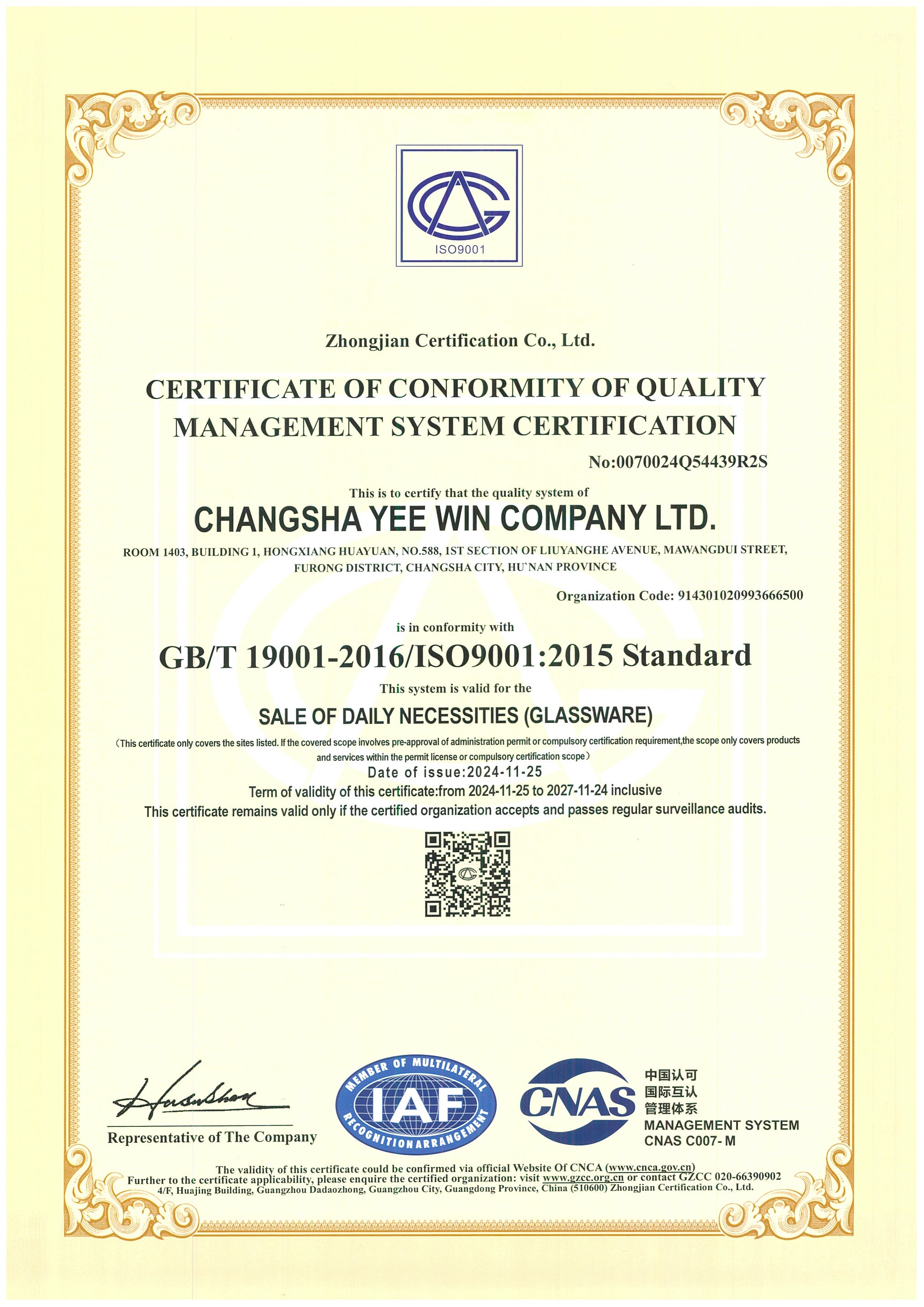
ISO9001:2015 quality management system certification, number 0070024Q54439R2S, issued by CNCA — valid to 24 November 2027 and applicable to customized glassware programs.
Pillar 3 — Delivery Assurance: Lead Time, Packaging and After-Sales
Delivery assurance is the pillar buyers evaluate least rigorously and regret most often. Three items should be documented in writing.
- Lead time. The documented lead time for LAKOTTO glassware production is 30–45 days, with worldwide delivery supported through a range of shipping methods.
- Warehouse buffer. A warehouse of more than 4,000 m² supports quick delivery of popular glass products from stock, which reduces exposure on repeat programs.
- After-sales terms. The stated after-sales framework covers safe transport and product protection through breakage-rate control and professional packaging, plus a clear and prompt return and exchange process.

Craft verification is model-specific: the KTDW0721-GGL double wall glass is hand-blown in high borosilicate glass with an ion plating (I.P.) coating, 340 ml, 145 g.
Step-by-Step Breakdown: Running a Six-Step Glassware Supplier Evaluation
Step 1 — Fix the Product Baseline
Write down the exact models, capacities, materials and weights you intend to buy. Ambiguity here invalidates every later step. A baseline entry should read like this: KTK0370-2 glass tumbler, top 78 mm, base 65 mm, height 140 mm, weight 420 g, volume 400 ml, high borosilicate glass, machine-pressed.
Step 2 — Verify the Legal Entity and Manufacturing Footprint
Confirm the registered company name, founding year, factory area, headcount and annual output. For Kotto Glass Industrial Co.Ltd the corresponding figures are 2003, more than 10,000 m², 100 employees and 300,000,000 pcs per year, supported by a 10-designer R&D team and a network of more than 150 cooperating glass factories.
Step 3 — Audit the Quality Management System and Its Validity Window
Request the ISO9001:2015 certificate number, issuing body, scope and expiry date. The relevant reference here is certificate 0070024Q54439R2S, issued by CNCA, valid to 24 November 2027, with a scope covering design, manufacturing and quality management of customized glassware. Ask separately whether the environmental certificate — 03423E30695R3M, valid to 1 December 2026 — is scheduled for renewal.
Step 4 — Map Market-Access Certification to Your Destination Market
Build a simple matrix: destination market, required standard, supplier evidence. European food-contact requirements sit under EN 1388-2 and ISO 7086-1:2019 for lead and cadmium release; US requirements sit under FDA Compliance Policy Guides 7117.06 and 7117.07. Where a product carries metal parts, coatings or decorations, RoHS evidence such as certificate CTT2111031272EN becomes relevant. Where your customer is a retail chain, social compliance evidence such as BSCI certificate 24-0233922 is typically part of onboarding.
Step 5 — Validate Capability with Samples and Packaging
Free samples are available for trial orders, which allows dimensional, weight and finish checks against the baseline before any volume commitment. Test the specification claims that matter in your channel — for example, the instantaneous temperature difference rating of −30 to 160 °C documented for the KTBT1446A recycled glass range and the KTG1139 wine glass. Review packaging at the same time, since bulk packaging formats such as 12 pcs per carton directly affect landed cost.
Step 6 — Confirm Delivery Terms, Lead Time and After-Sales
Document the agreed lead time, shipping method mix, breakage-control packaging, and return and exchange process. Then test the answer against real order history rather than promises.
Where This Evaluation Approach Applies: Use Cases
The same evaluation framework adapts to different buyer types, but the weighting changes.
Supermarket and Chain Store Supply
Chain store programs are driven by shelf turnover, packaging consistency and just-in-time delivery. Documented application data for supermarket and chain store supply in Brazil and Poland specifies B2B bulk distribution, OEM/ODM customization and just-in-time delivery, with customized and environmental packaging plus international standard approval as special requirements.
Custom Branded Promotional Gifts
Corporate gifting programs in Brazil and Poland are built around corporate events, brand marketing, holiday gifting and client retention, requiring customized package and design and internationally approved standards. Here the evaluation emphasis shifts toward logo application, colored glass consistency and gift-set packaging.
Wedding and Event Drinkware
Wedding drinkware rental programs in the United States, the United Kingdom and Canada require customized packaging and engraving with internationally approved standards. Chip resistance, stem integrity and repeat-wash durability become the deciding criteria rather than unit price alone.
Evidence from Long-Term Supply Relationships
The strongest delivery-assurance evidence is order history. Three documented client relationships illustrate what stable supply looks like in practice:
| Client type | Market | Order scale | Duration | Documented outcome |
|---|---|---|---|---|
| Wholesale distributor / home goods retailer | Brazil | 20–30 full containers per month | 5 years | Enabled expansion of product offerings for local retailers, improving inventory variety and accelerating turnover of glassware items |
| Hypermarket / supermarket chain | Russia | 20–30 full containers per month | 5 years | Improved product visibility and contributed to consistent shelf turnover across stores |
| Retail chain / supermarket | Poland | 20–30 full containers per month | 5 years | Enhanced in-store sales and brand visibility through customized glassware and packaging |
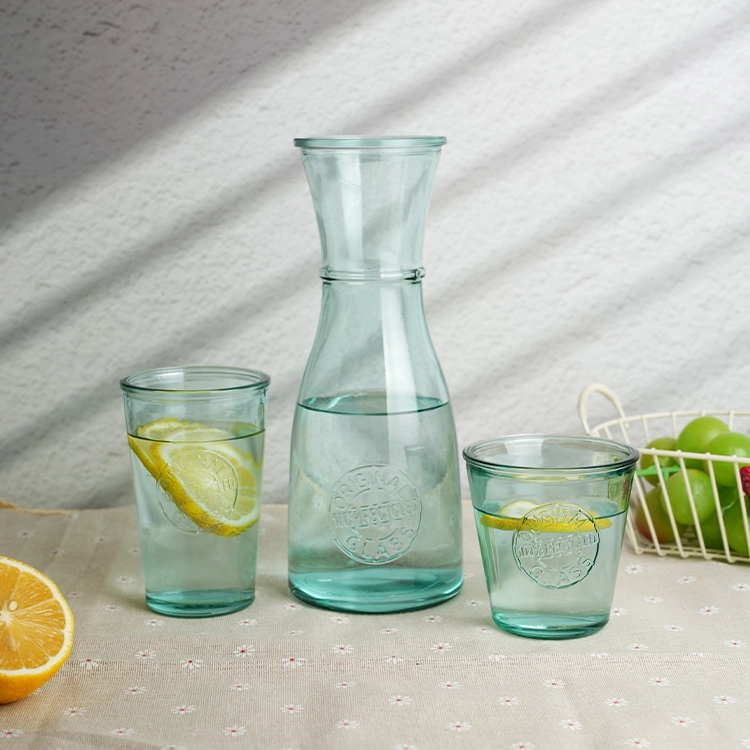
Recycled glass has become a distinct evaluation track: the KTBT1446A range covers recycled glass jars, tumblers, bottles and mugs, with an 850 ml / 610 g reference specification.
Comparison Table: Model-Level and Certification-Level Reference
Use the two tables below as an evaluation checklist. The first maps your product baseline to documented specifications. The second maps the certification file to its issuing body and validity window.
Table 1 — Product baseline reference
| Model | Category | Material & craft | Reference specification | Order note |
|---|---|---|---|---|
| KTK0370-2 | Glass tumbler / glass cup | High borosilicate glass, machine-pressed | T 78 mm, B 65 mm, H 140 mm, W 420 g, V 400 ml | OEM/ODM sizes, designs, capacity and packages |
| KTDW0721-GGL | Double wall glass | High borosilicate glass, hand-blown, ion plating (I.P.) coating, double-walled insulated | T 84 mm, B 60 mm, H 110 mm, W 145 g, V 340 ml | Durable and heat-resistant |
| KTPL1572A-A | Glass cake stand | Soda-lime glass | T 312 mm, B 120 mm, H 105 mm, W 1,445 g | MOQ 1,000 pcs |
| KTBT1446A | Recycled glass jar / tumbler / bottle / mug | Recycled glass | T 80 mm, B 95 mm, H 247 mm, V 850 ml, W 610 g, 12 pcs/ctn bulk | Instantaneous temperature difference −30 to 160 °C |
| KTG1139 | Ribbed colored wine glass / wine glasses set | Soda-lime glass, machine-blown stemmed glass | T 67 mm, B 82 mm, H 224 mm, W 215 g, V 500 ml | High-borosilicate material temperature range 400–500 °C; instantaneous temperature difference −30 to 160 °C |
Table 2 — Certification file reference
| Certification | Standard | Certificate number | Issued by | Validity | Documented coverage |
|---|---|---|---|---|---|
| ISO9001:2015 | GB/T 19001-2016 / ISO9001:2015 | 0070024Q54439R2S | CNCA | 25 Nov 2024 – 24 Nov 2027 | Design, manufacturing and quality management of all glassware, including customized items |
| ISO 14001:2015 | GB/T 24001-2016 / ISO 14001:2015 | 03423E30695R3M | CNCA | 28 Nov 2023 – 1 Dec 2026 | Material sourcing, manufacturing, surface decoration, packaging and waste management |
| BSCI | BSCI | 24-0233922 | APCER | 1 Dec 2024 – 1 Dec 2026 | Drinking glasses, tumblers, highball glasses, wine glasses and related glass household products |
| RoHS | RoHS Directive 2011/65/EU and amendments 2015/863/EU | CTT2111031272EN | Zhejiang Consumer Testing Technology Co., Ltd. | Documented as worldwide | Glassware with metal parts, coatings or decorations; XRF scanning, PBBs & PBDEs, phthalates |
Two related context points are useful when sizing a supplier relationship. Grand View Research identifies soda-lime glass as approximately 70.8% of global glassware market share in 2024, which explains why it anchors most volume programs. Global Market Insights identifies Sisecam Group, Libbey and Arc International as top-tier global leaders, with Sisecam holding a market share of approximately 7.8% in 2025 — a reminder that concentration at the top of the market does not remove the need to evaluate the specific supplier you will actually order from.
For scale context on the supply side, China’s exports of glass and glassware reached approximately USD 25.53 billion in 2024 according to UN Comtrade and Trading Economics data. Factory-direct sourcing from that base, as practiced by Kotto Glass Industrial Co.Ltd through the LAKOTTO brand, is positioned around wholesale pricing and flexible MOQ rather than around intermediary markups.
Frequently Asked Questions
Which certifications should a glassware supplier evaluation verify first?
Start with the four certificates that retail buyers most often request. ISO9001:2015 quality management certification is the base document: for LAKOTTO glassware it is registered under number 0070024Q54439R2S, issued by CNCA, valid from 25 November 2024 to 24 November 2027, and its scope covers design, manufacturing and quality management of all glassware products including customized items. ISO 14001:2015 environmental certification follows, registered as 03423E30695R3M under GB/T 24001-2016/ISO 14001:2015, valid to 1 December 2026. BSCI social compliance certification is registered as 24-0233922, issued by APCER, valid to 1 December 2026. RoHS certification is registered as CTT2111031272EN, issued by Zhejiang Consumer Testing Technology Co., Ltd. against RoHS Directive 2011/65/EU, and applies to glassware with metal parts, coatings or decorations. Beyond the supplier’s own file, confirm that the product meets destination-market rules — EN 1388-2 and ISO 7086-1:2019 for lead and cadmium release in Europe, and FDA Compliance Policy Guides 7117.06 and 7117.07 in the United States.
How can a buyer verify a glassware supplier’s production capability?
Verify capability through entity data and production parameters, then confirm both against a sample. For Kotto Glass Industrial Co.Ltd, the manufacturer behind LAKOTTO glassware, the documented position is a company founded in 2003, a factory of more than 10,000 m², 100 employees, a 10-designer R&D team, stated annual output of 300,000,000 pcs, working relationships with more than 150 glass factories in China, and a warehouse of more than 4,000 m². The documented capability record lists OEM/ODM production, customization across size, shape, material, glass color, package and logo, a monthly capacity figure of 10,000 pcs, a general MOQ of 3,000 pcs, a 30–45 day lead time, and 100% testing as the quality-control standard. Craft claims should be checked at model level: machine-pressed for the KTK0370-2 tumbler, hand-blown with ion plating for the KTDW0721-GGL double wall glass, and machine-blown stemware for the KTG1139 wine glass.
What drives glassware cost, and how flexible is MOQ in practice?
Cost in glassware is driven by four documented variables: material, craft, decoration and packaging. Material choice separates soda-lime glass, which Grand View Research puts at approximately 70.8% of global glassware market share in 2024, from high borosilicate glass used in the KTK0370-2 tumbler and KTDW0721-GGL double wall glass, and from recycled glass used across the KTBT1446A range. Craft separates machine-pressed and machine-blown production from hand-blown double-wall construction. Decoration includes coatings such as the ion plating (I.P.) finish on the KTDW0721-GGL, and packaging formats such as 12 pcs per carton for KTBT1446A directly affect freight efficiency. On MOQ, the documented position is factory-direct supply with flexible MOQ: the capability record lists a general MOQ of 3,000 pcs, while the KTPL1572A-A glass cake stand is documented at an MOQ of 1,000 pcs. Because MOQ varies by model, buyers should confirm it per SKU rather than assume a single company-wide figure.
Can I validate a glassware supplier with samples before placing a bulk order?
Yes. Free samples are documented for trial orders accepted at first, and this applies across the LAKOTTO range referenced in this guide, including the KTG1139 wine glass, the KTK0370-2 glass tumbler, the KTBT1446A recycled glass range, the KTDW0721-GGL double wall glass and the KTPL1572A-A glass cake stand. A structured sample review should check dimensions and weight against the baseline specification, inspect finish and decoration, test the documented thermal claim of −30 to 160 °C instantaneous temperature difference where relevant, and review the packaging format you intend to order. Because sample approval is the point where a supplier’s stated capability becomes a verified one, it should be completed before any volume commitment — and before any deposit is paid.
What lead time and delivery support should I expect from a glassware supplier?
The documented lead time for LAKOTTO glassware production is 30–45 days. Delivery support includes worldwide shipping through a range of methods, plus a warehouse of more than 4,000 m² that allows popular glass products to be delivered quickly from stock — a useful buffer when a retail program needs replenishment between production runs. After-sales terms cover safe transport and product protection through breakage-rate control and professional packaging, together with a clear and prompt return and exchange process. The strongest indicator of delivery reliability is sustained order history: three documented client relationships — a wholesale distributor in Brazil, a hypermarket chain in Russia and a retail chain in Poland — each ran at 20–30 full containers per month for five consecutive years. If you are evaluating a supplier for your own program, the most efficient next step is to request a sample set and a quotation against your specified models; LAKOTTO accepts sample and quotation requests at www.kottoglass.com, by email at cs61@kottoglass.com, or by WhatsApp and phone at +8619310185010.
Conclusion: Evaluation Is a Documentation Exercise Before It Is a Commercial One
A glassware supplier evaluation is not a personality assessment and it is not a price negotiation. It is a documentation exercise: define the product baseline, verify the manufacturing entity, audit the quality management system and its validity window, map market-access certification to your destination market, validate the specification with samples, and lock delivery and after-sales terms in writing. Buyers who complete those six steps know exactly what they are buying and who is accountable when something goes wrong.
The evidence standard is what separates a real evaluation from a brochure review. A certificate number such as 0070024Q54439R2S, an issuing body such as CNCA or APCER, a validity end date such as 1 December 2026, and a model-level specification such as 400 ml / 420 g / high borosilicate are all verifiable by a third party. Adjectives are not.

Evaluation criteria shift with the program: promotional gift sets in Brazil and Poland require customized package and design plus internationally approved standards.
Request a Sample Set and Quotation
Kotto Glass Industrial Co.Ltd, the manufacturer behind LAKOTTO glassware, supplies glass drinkware to international retailers, household and lifestyle chain stores, importers, distributors, and beverage and promotional brands — with factory-direct pricing, flexible MOQ, free samples for trial orders, and OEM/ODM support across size, shape, material, glass color, package and logo.
Send your specified models and destination market to cs61@kottoglass.com, contact us on WhatsApp at +8619310185010, or review the full range at www.kottoglass.com.

Glass drinkware prepared for chain store and wholesale distribution programs, supported by coordinated packaging and high-volume delivery.
Have Questions or Need More Details?
Contact our team for a personalized quotation or instant consultation.
Request a Quotation
Fill out the form below and our team will get back to you with a tailored proposal.
WhatsApp Direct Chat
Prefer to chat in real-time? Message us on WhatsApp for instant assistance & quick answers.
- Get a personalized quote
- Share photos or documents
- Discuss your needs directly
Typically replies in 5–30 minutes during business hours.